FORTIS: the Sun Ballast® system designed to withstand the most extreme conditions
In recent years, the increasing frequency and intensity of extreme weather events have profoundly changed the way photovoltaic systems are designed. Stronger wind gusts, unpredictable environmental conditions, and complex dynamic loads now require solutions capable of ensuring safety, operational continuity, and long-term stability, even in highly exposed environments.
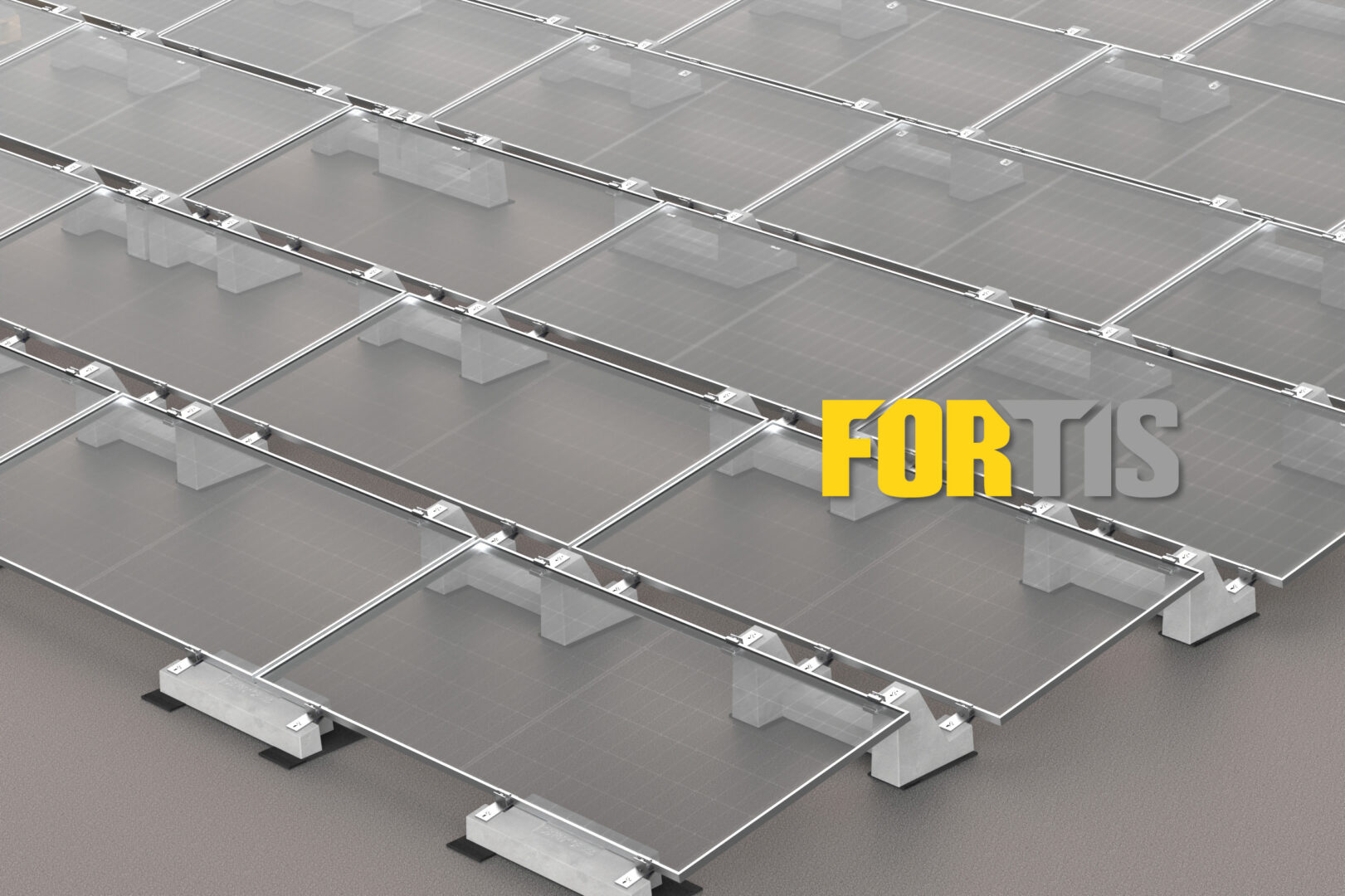
This is the context in which FORTIS was created: the new Sun Ballast system for flat roof installations, designed to deliver advanced structural performance even in the most critical situations. It is not simply a product update, but a concrete design evolution developed to meet the new demands of the market and the increasingly stringent requirements of designers, EPC contractors, and industry operators.
Wind resistance as a decisive criterion
FORTIS is the result of nearly two years of research and development, built on more than 14 years of field experience and thousands of completed installations. The goal was not to adapt to the limitations of traditional structures, but to overcome them by significantly improving performance under dynamic loads, particularly those generated by wind.
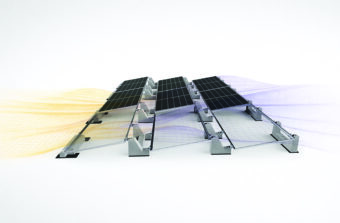
Verification activities included laboratory testing and wind tunnel testing, both essential for analyzing the aerodynamic behavior of the structure in real-world configurations. These analyses made it possible to optimize pressure distribution across the modules and to intervene precisely on the system’s most stressed points.
The result is a structure capable of achieving wind resistance values of up to 1600/2400 Pa, equivalent to approximately 200 km/h. This is especially significant because it allows the structure’s resistance to match that of the photovoltaic modules themselves: unlike many traditional systems, the support structure is no longer the performance limit, but works in synergy with the module, contributing to the overall safety of the system even under extreme and variable conditions.
Time as a factor: growing risk and the need for advanced design
The impact of weather conditions on photovoltaic systems is becoming an increasingly decisive factor during the design phase. The intensification of extreme events — including wind gusts, hailstorms, and storms — is increasing the exposure level of installations, placing particular stress on flat roof systems, which are more sensitive to uplift and turbulence phenomena.
This scenario translates into a concrete increase in the probability of incidents, involving not only extreme events but also progressive phenomena such as micro-movements, loosening of fixings, and repeated stresses over time. Without solutions specifically designed to manage dynamic loads and climate variability, even correctly installed systems can develop critical issues, leading to extraordinary maintenance work, unexpected costs, and reduced operational continuity.
The weak point, finally overcome
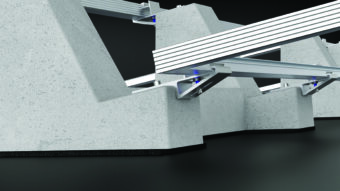
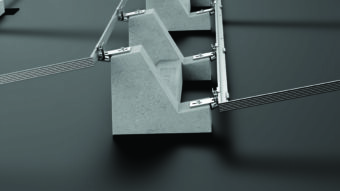
One of the system’s most innovative elements is the exclusive clamp-bracket developed internally by Sun Ballast. This component introduces an advanced fixing system that locks the module both at the bottom and at the top, ensuring a more stable grip and a uniform distribution of stresses.
The fixing configuration is designed to adapt to different load conditions: modules in internal areas are anchored with four independent clamps, while those in perimeter areas — more exposed to wind action — can rely on six fixing points. A solution that increases resistance exactly where it is most needed, without complicating installation operations.
Another distinctive feature is the collaborative structural logic. Unlike traditional approaches, the module rows do not function as isolated elements but are interconnected in a grid that distributes loads in both directions. This approach reduces localized stresses and improves overall stability, especially in the presence of dynamic actions and turbulence.
In the photovoltaic mounting sector, the connection between the module and the structure represents one of the most critical points. Even with correctly dimensioned ballast, inadequate fixing can compromise the safety of the entire system. FORTIS addresses this issue by strengthening the connection and improving structural continuity.
Fewer components, greater control
In addition to its mechanical performance, the system offers high design flexibility. It allows the installation of modules of different sizes in horizontal configuration while maintaining fixing on the long side without the need for additional components. This is a concrete advantage that facilitates adaptation to complex layouts and specific technical constraints.
Simplification is another key aspect of the project. FORTIS consists of only five elements: membrane, initial ballast, central ballast, end ballast, and clamp-bracket. This design choice reduces operational complexity, improves site logistics, and enables faster installation times, minimizing the risk of errors and increasing activity predictability.
Development activities were supported by advanced simulations and experimental testing, which made it possible to verify component resistance and the system’s ability to maintain high performance even under prolonged loads over time. This translates into greater overall reliability and reduced maintenance requirements.
When the structure becomes a competitive advantage
FORTIS was created to meet the needs of an evolving market in which the structure is no longer a secondary element, but a strategic component of the system. A solution that combines strength, simplicity, and flexibility, designed to last over time even in the most demanding conditions.
Not only safety, but also greater operational efficiency, reduced indirect costs, and reliability throughout the entire lifecycle of the installation. In a context where performance must be guaranteed over the long term, FORTIS represents a concrete step toward a new generation of support systems for flat roof photovoltaic installations.