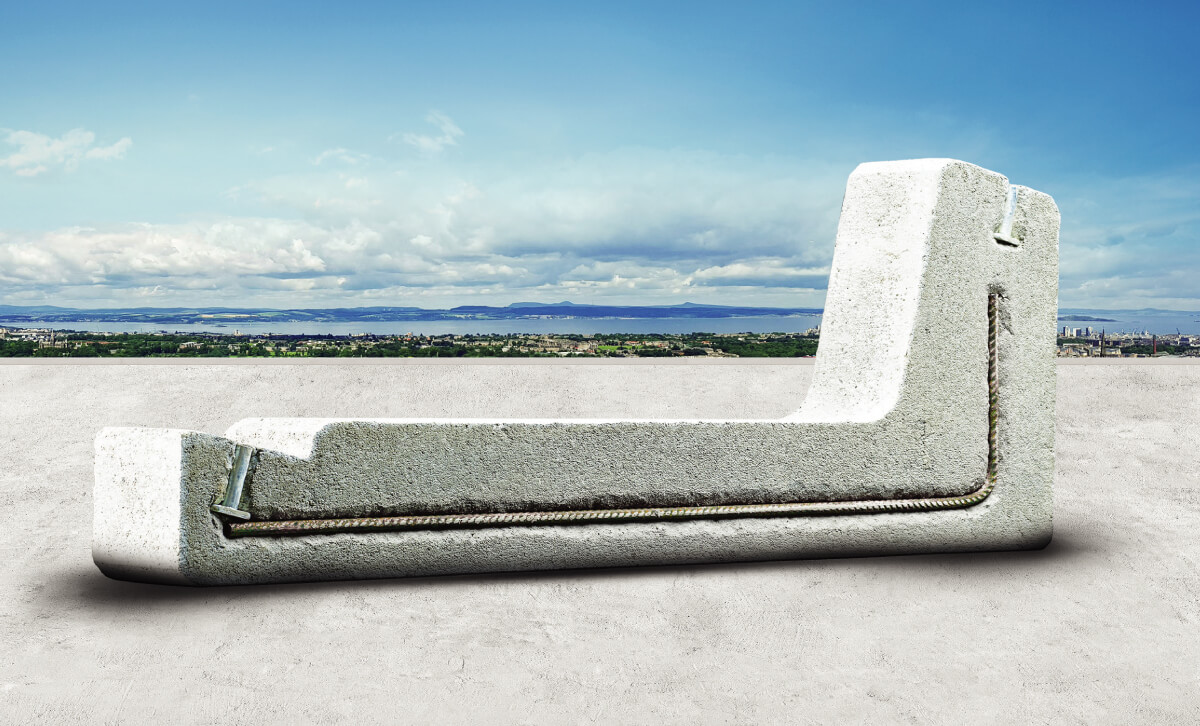
Solar racking solutions built for flat roofs
in Italy
Choosing the right solar racking solutions for flat roofs can make
or break a project’s profitability—especially in Italy, where installers and designers often
work under tight timelines, strict safety requirements, and varied wind conditions from coast to
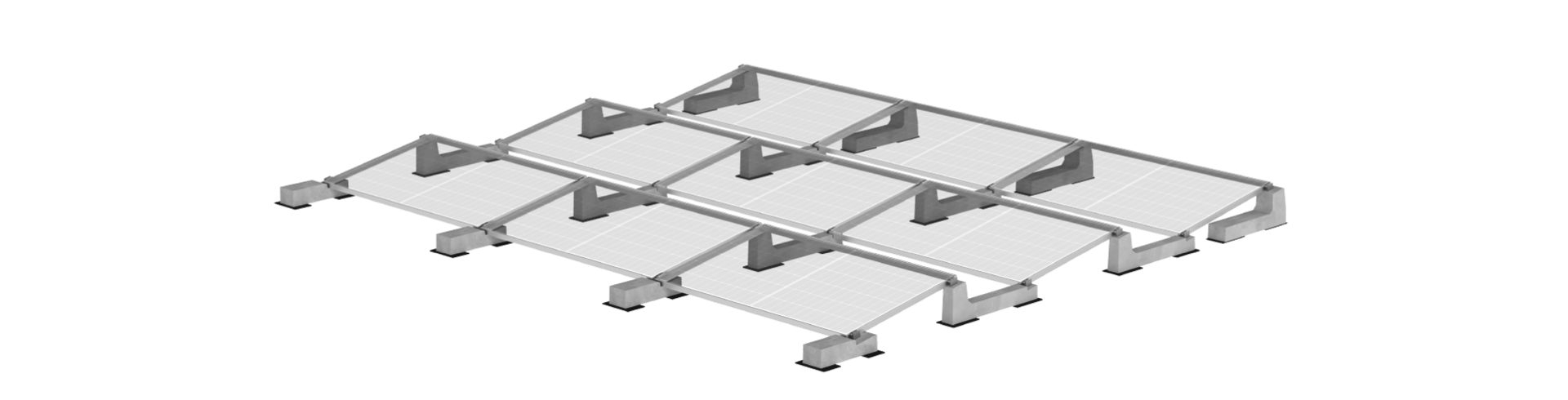
inland. A reliable approach is ballast-based mounting that secures PV modules using engineered
concrete weights instead of roof penetrations. The advantage is immediate: fewer waterproofing
concerns, fewer callbacks, and a cleaner installation workflow. For installers, that translates
into faster assembly, reduced component handling, and a more predictable jobsite routine. For
engineering teams, it means clearer load paths, repeatable configurations, and mounting systems
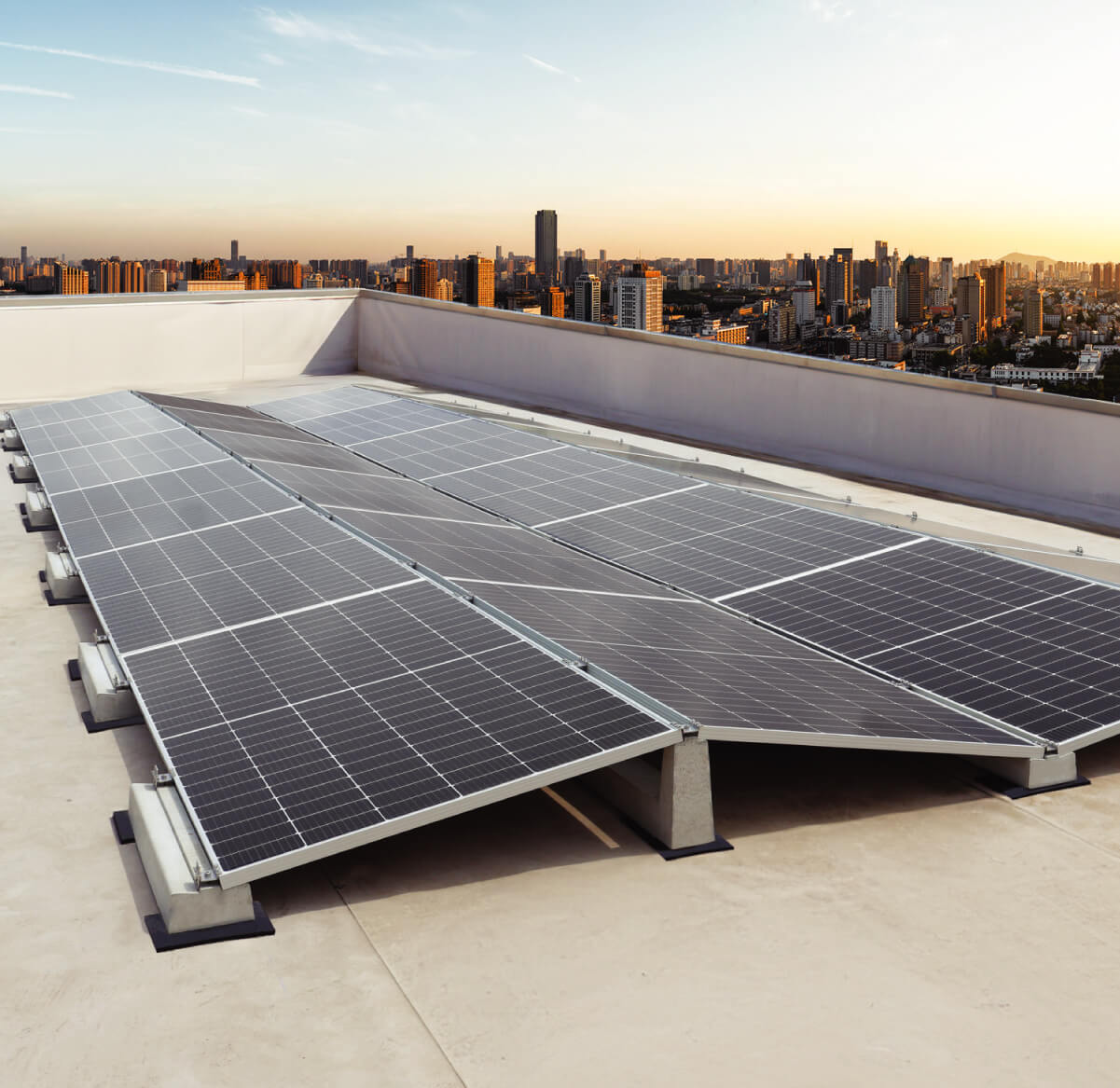
designed to meet common structural constraints on commercial buildings. Modern flat-roof PV
mounting also needs flexibility: different tilt angles, row spacing, and aerodynamic layouts to
optimize energy yield while staying within roof load limits. When solar racking solutions are
designed as a complete system—rather than a collection of parts—projects run smoother: simpler
logistics, quicker planning, and fewer surprises during commissioning. If your goal is to
deliver durable rooftop solar with less complexity, a no-drill, ballast-supported structure is
one of the most practical options for Italian B2B photovoltaic projects today.
Why installers prefer no-drill,
ballast-mounted PV systems
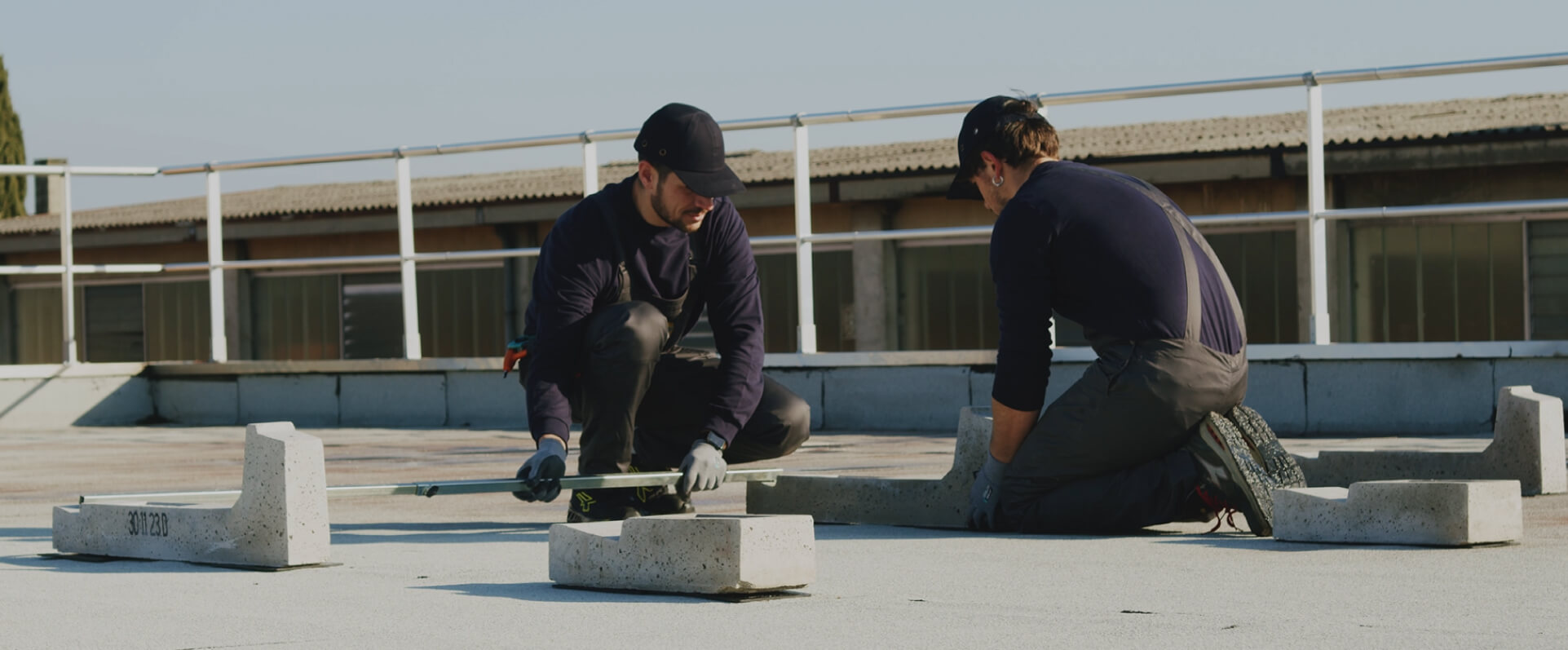
Installers choose solar racking solutions that help them finish
faster without compromising safety. On flat roofs, drilling and anchoring can introduce delays:
locating safe fixing points, coordinating waterproofing, and managing edge conditions. A
concrete ballast PV mounting system reduces these bottlenecks by eliminating roof perforations,
minimizing tools and fasteners, and streamlining panel placement. Fewer components usually means
fewer errors and a shorter learning curve for crews. This approach also supports cleaner site
management—less debris, fewer penetrations to document, and fewer weather-related interruptions.
From small commercial arrays to large industrial rooftops, ballast-based structures can be
configured with standard module sizes, consistent clamping, and stable alignment. The result is
a practical balance between speed and reliability: straightforward installation steps,
repeatable layouts, and robust support that stands up to real jobsite conditions. When every
hour on the roof matters, choosing solar racking solutions that simplify the workflow is a
competitive advantage.
Technical support and design confidence for
engineers and distributors
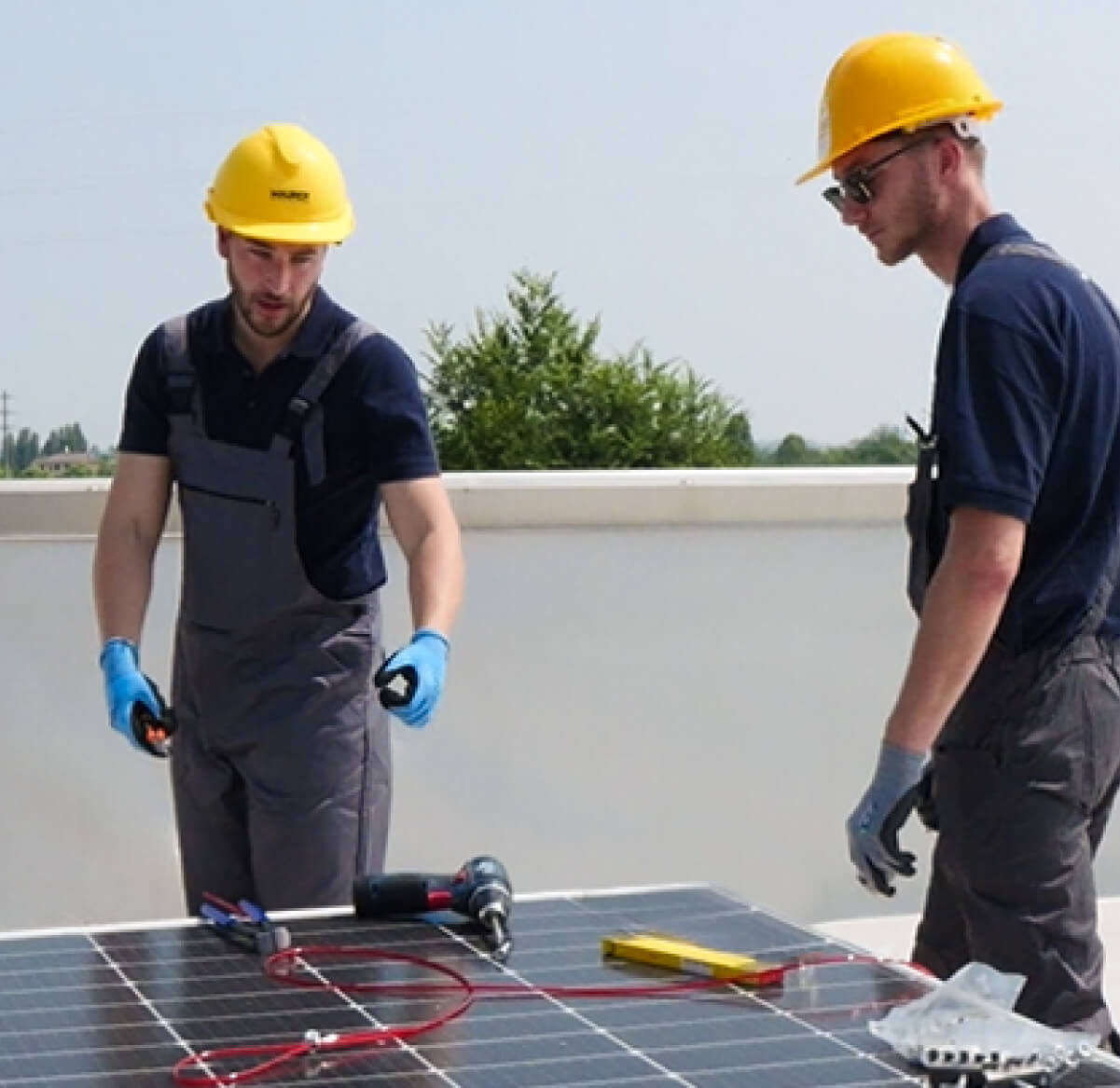
For engineers, project managers, and distributors, solar racking
solutions must be more than “compatible”—they must be verifiable. That means dependable
documentation, tested configurations, and support during design and sizing. A partner-led
approach helps reduce design risk by assisting with layout development, load checks, and system
selection for specific roof constraints. In Italy’s diverse climate zones, wind exposure and
building geometry can significantly influence the final configuration; having access to
technical guidance makes decisions faster and more defensible. Distributors also benefit from a
product that’s easy to explain and easy to specify: a recognizable flat-roof mounting concept,
clear system logic, and consistent availability for ongoing demand. Above all, long-term
durability matters—materials and structures should be built for years of rooftop exposure and
maintenance access. If you’re looking for solar racking solutions that combine no-penetration
mounting, faster installation, and reliable technical assistance from concept to execution,
explore the flat-roof PV options available at www.sunballast.com and choose a setup that keeps
projects simple, safe, and efficient.