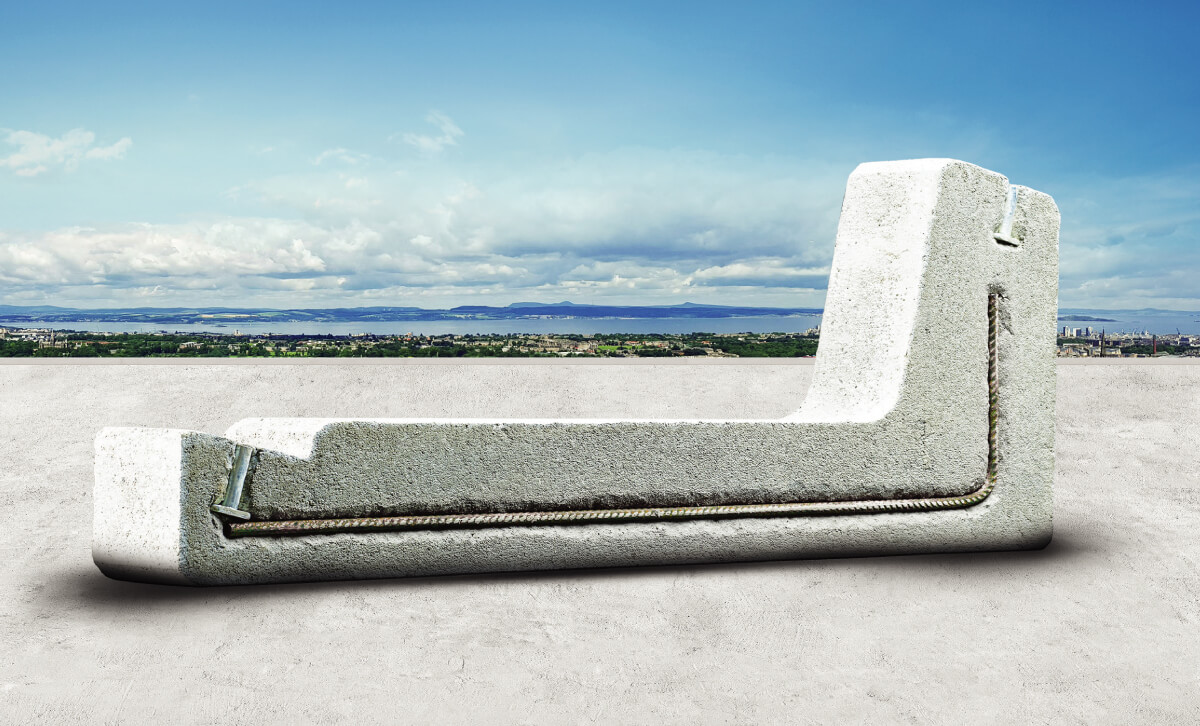
Why solar panels on flat roof are booming in
Italy
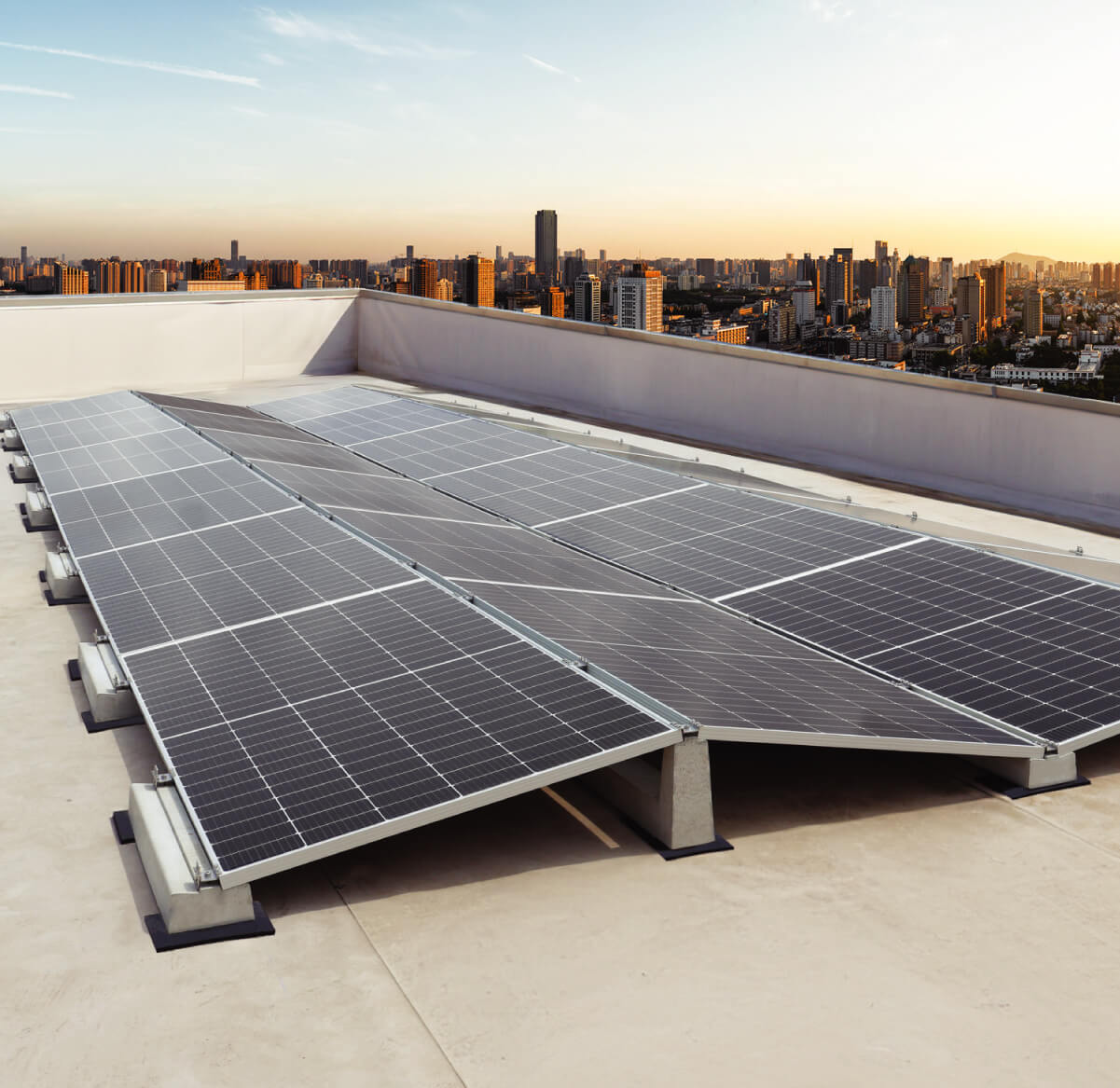
Installing solar panels on flat roof surfaces is one of the
smartest ways for Italian businesses to cut energy costs without disrupting operations.
Warehouses, industrial buildings, logistics hubs, and commercial properties often have large,
usable roof areas—yet traditional mounting structures can slow down the job and introduce risks.
Flat roofs demand careful choices: wind uplift, roof loads, membrane protection, drainage paths,
and fast installation timelines all matter. That’s why more professionals are moving toward
ballasted solutions that keep the waterproofing intact. Instead of drilling into the roof,
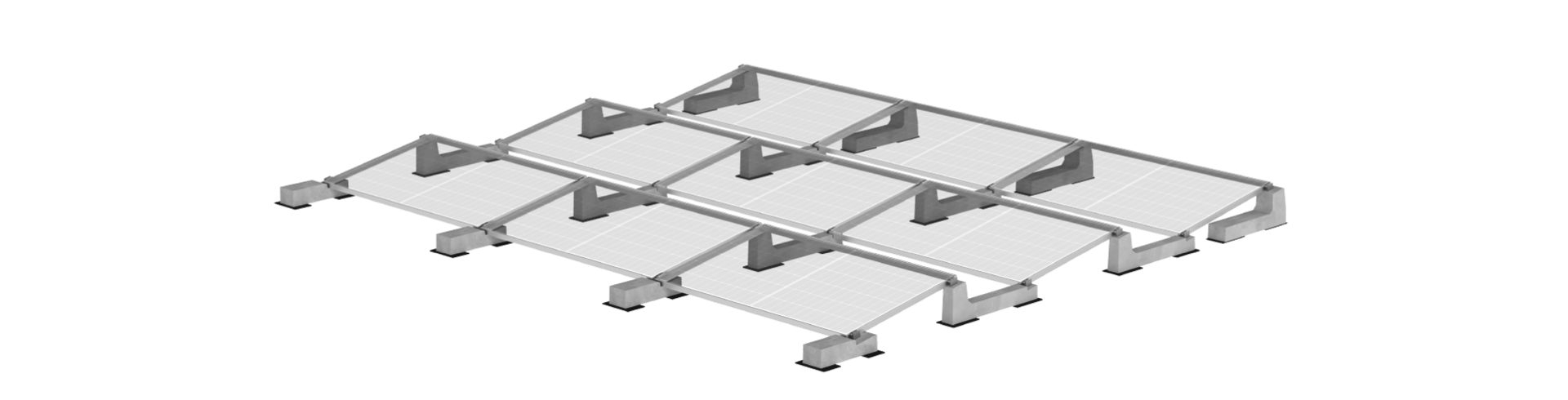
concrete ballast systems hold the PV array in place through weight and smart geometry, helping
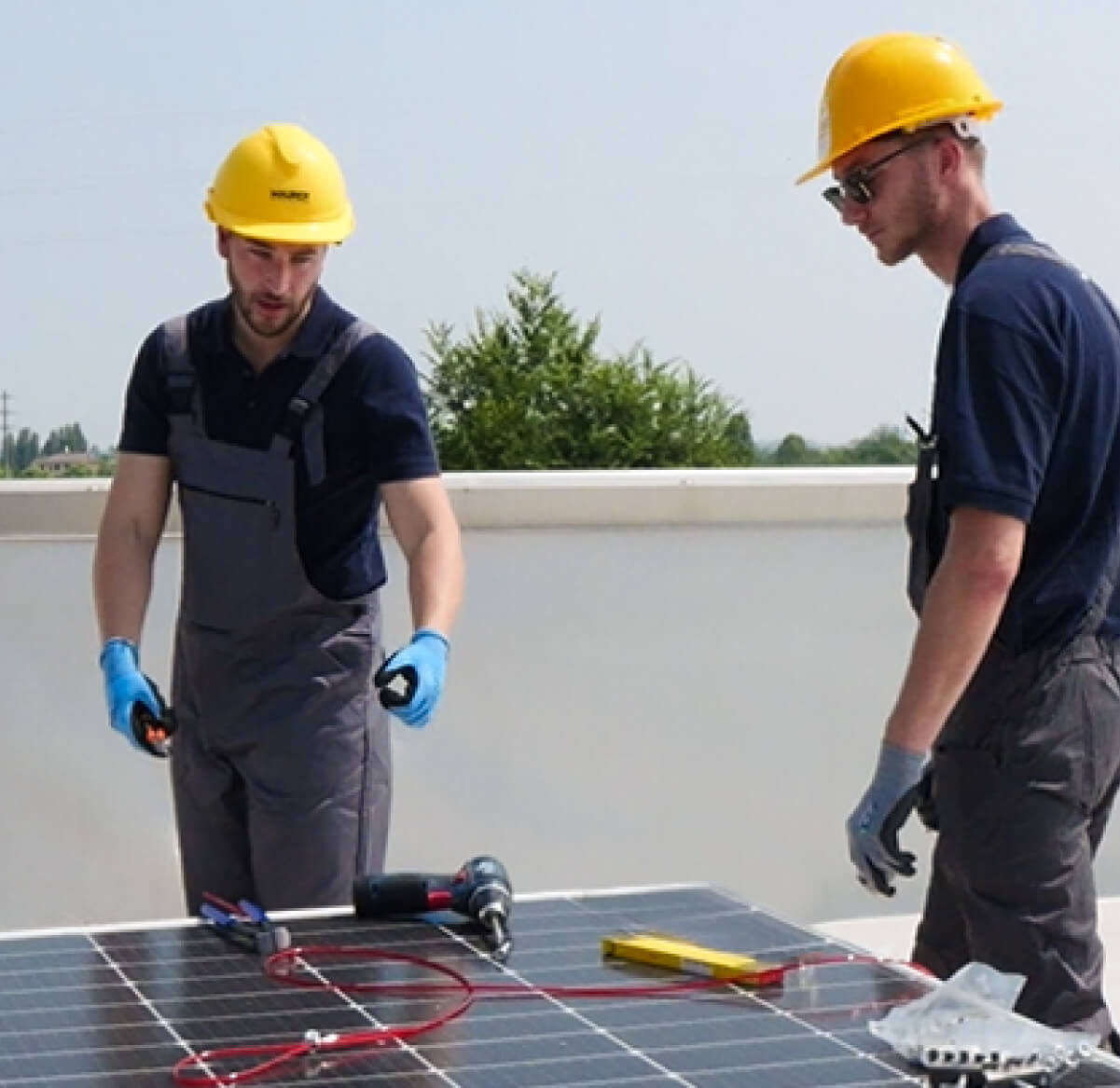
reduce leakage risk and simplifying approvals. For installers, this means fewer components,
fewer surprises on site, and quicker commissioning. For designers and engineers, it means
predictable loads, tested configurations, and documentation that supports accurate sizing. For
distributors, it’s a product category with steady demand and clear benefits to explain. If
you’re working in the Italian market and need a practical, proven approach to solar panels on
flat roof projects, choosing a solution designed specifically for flat-roof photovoltaics can
make every phase smoother—from the first layout to the final connection.
No roof penetrations: faster installs, fewer
headaches
The biggest pain point with solar panels on flat roof
installations is often the fixing method. Mechanical anchors can mean extra labor, potential
thermal bridges, and a constant concern: will the roof stay watertight over time? A ballasted
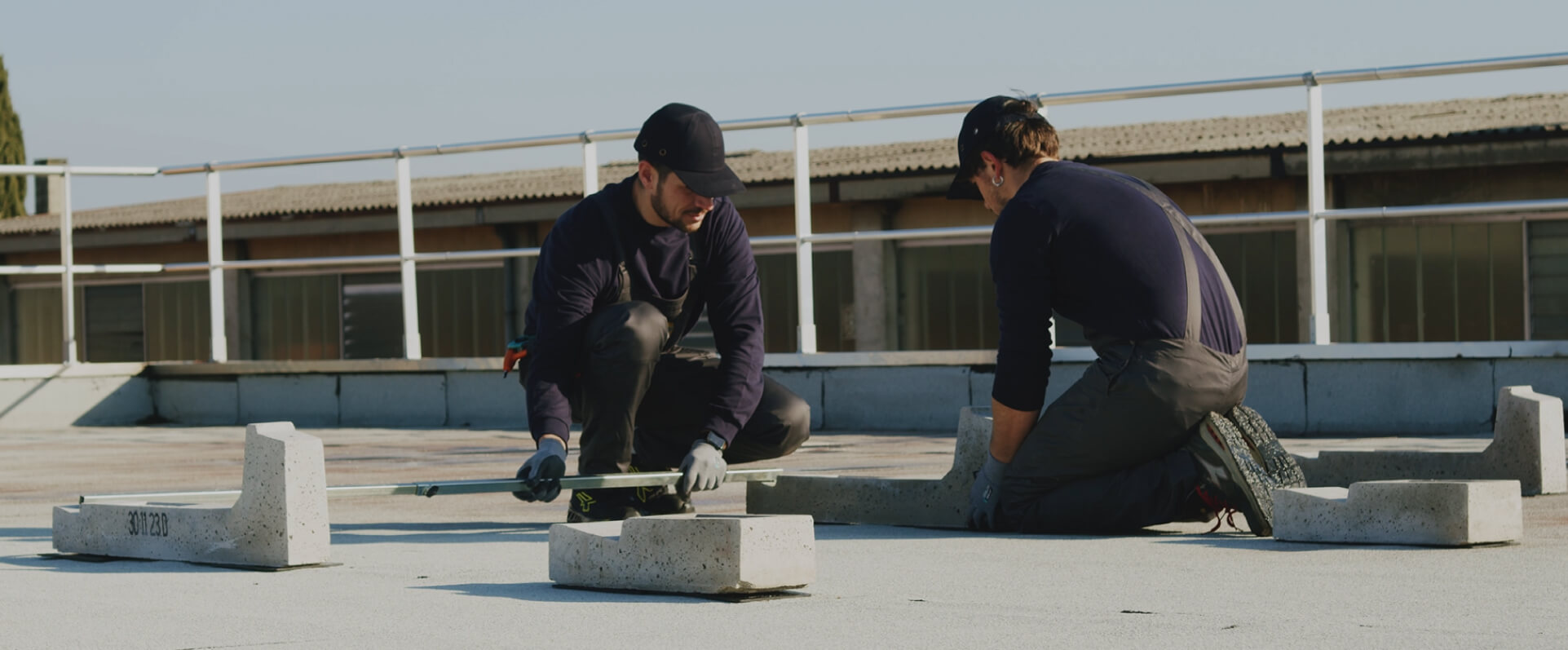
mounting approach removes that stress. With pre-engineered concrete weights, crews can position
modules quickly, protect the membrane with suitable interfaces, and avoid invasive works. The
result is a cleaner site, shorter installation time, and fewer coordination issues with roofing
contractors. It also helps when timelines are tight—common in industrial settings where downtime
is expensive. Beyond speed, reliability matters: stable structures, durable materials, and
solutions tested for real wind conditions help you deliver systems that perform year after year.
Add the advantage of modular layouts—such as different tilt angles and orientations—and you can
optimize production while respecting roof constraints. For professionals, the real win is
simplicity that doesn’t compromise safety: fewer parts to manage, straightforward assembly, and
a mounting system built for flat-roof PV from the start.
A technical partner for design, sizing, and
execution
Flat-roof PV is not just about placing panels—it’s about getting
every calculation and detail right. Wind exposure, parapet height, roof zones, ballast
distribution, and structural limits all influence the final design. When specifying solar panels
on flat roof projects, having access to technical support can significantly reduce risk and save
time. Look for a supplier that acts like a partner: helping with preliminary design, system
sizing, and project development all the way to execution. This is especially valuable for
engineering studios that need dependable data and certified solutions, and for installers who
want to avoid last-minute changes on site. A complete approach should include guidance on
layouts, load checks, and practical installation recommendations, so you can deliver a
compliant, efficient system with confidence. If your goal is to make flat-roof solar simpler,
safer, and more efficient in Italy, choose a solution engineered for speed, stability, and
predictable performance—so your next project is easier to sell, easier to build, and easier to
stand behind.