Why a Smart Solar Panels Layout Matters on
Italian Flat Roofs
A well-designed solar panels layout is the difference between a
smooth installation and days lost to on-site adjustments. On flat roofs—common across Italian
industrial buildings—installers and designers must balance energy yield, wind resistance, roof
loads, and safe walkways for maintenance. The right layout starts with understanding
constraints: parapets, drains, HVAC units, shading, and fire-safety corridors. Then it comes
down to selecting the most effective orientation (south-facing or east–west), optimizing row
spacing to limit self-shading, and keeping cable routes clean and protected. For B2B
professionals, repeatability is key: a layout that uses standardized module positioning reduces
measuring time, minimizes mounting mistakes, and makes commissioning faster. Just as important,
a non-penetrating approach helps protect waterproof membranes, lowering the risk of leaks and
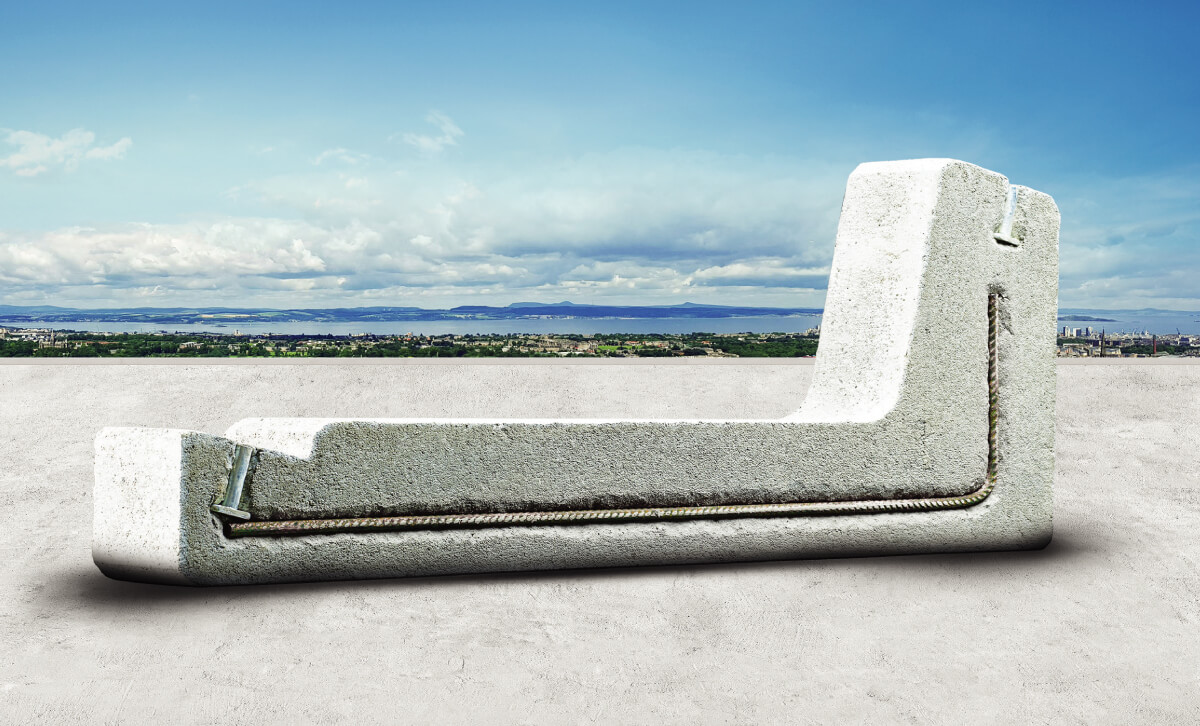
warranty disputes. Concrete ballast mounting systems are particularly suited to this scenario
because they can streamline rooftop logistics—fewer parts, fewer tools, and a predictable
assembly sequence. When your solar panels layout is engineered around certified components and
verified load data, you reduce uncertainty, speed up workflows, and deliver a system that
performs reliably for years. In short: better layout choices mean higher productivity for
installers, clearer calculations for engineers, and a more dependable offer for
distributors—without complicating the roof.
Key Layout Choices: Orientation, Spacing, Wind
Loads, and Roof Protection
When planning a solar panels layout, start with the performance
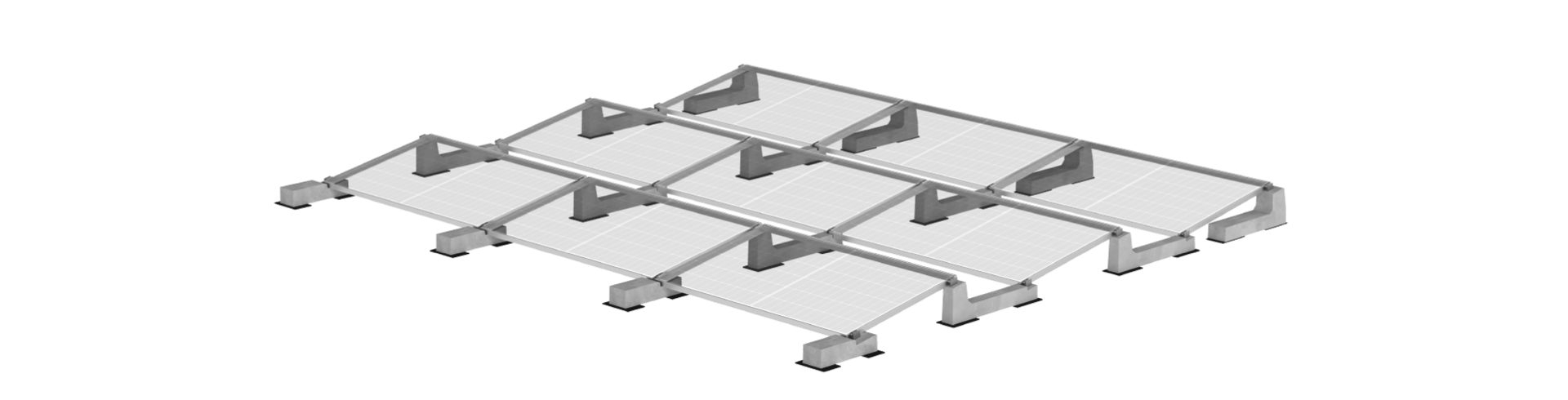
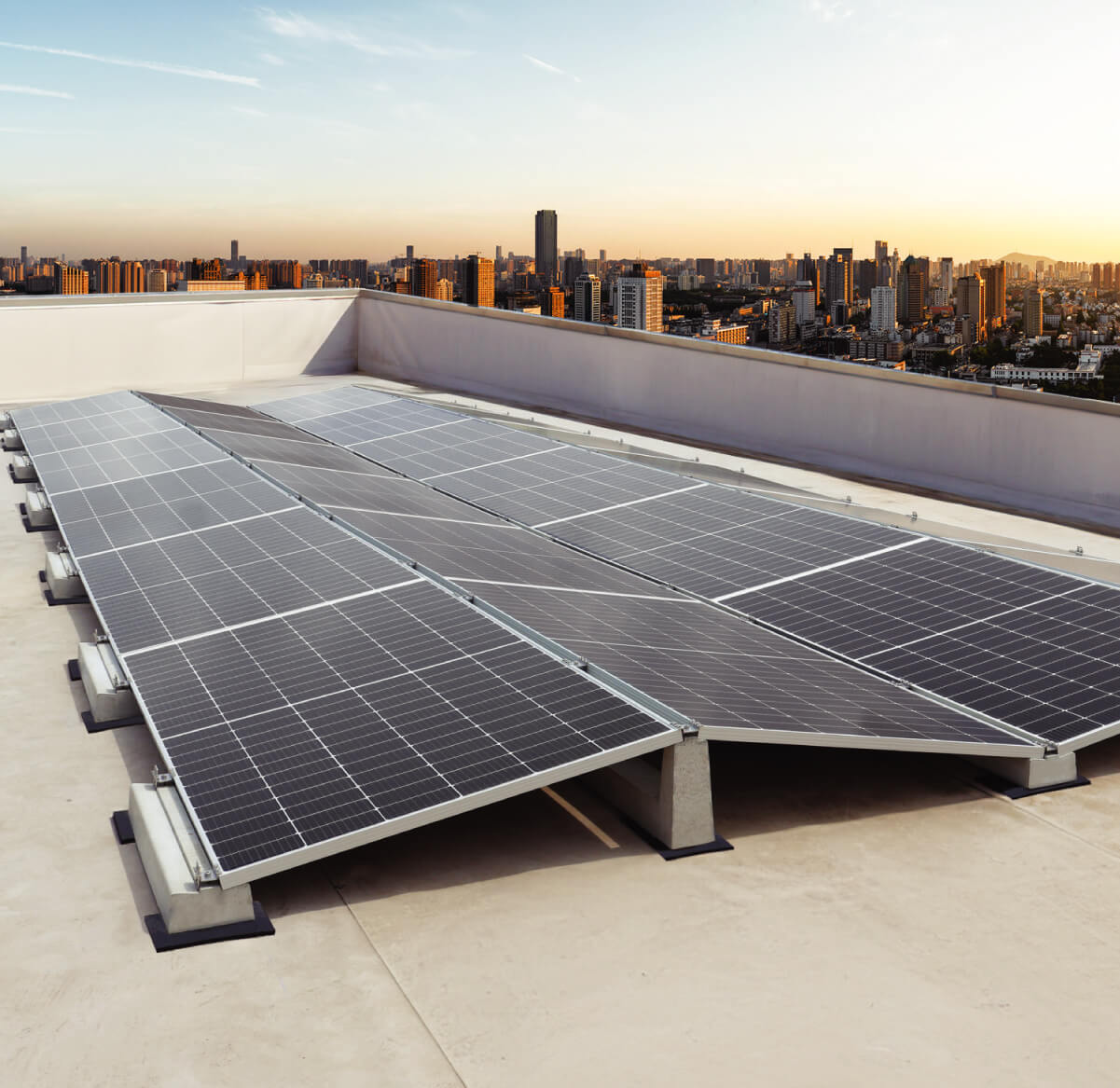
goal and the roof’s limitations. South-facing rows can maximize annual production, while
east–west configurations often increase installed kWp per square meter and can reduce ballast
needs thanks to lower tilt angles. Row spacing must consider winter sun angles and the shading
tolerance of your module technology, so strings keep performing even in partial shade. Wind
loads are a decisive factor in Italy’s varied climate zones; edge and corner areas usually need
higher resistance, which influences where you place higher-tilt rows and how you distribute
weight. Roof load verification is equally critical on older commercial structures, where
concentrated loads can be a red flag. Non-penetrating, ballasted supports help preserve
membranes by avoiding roof drilling, which can reduce installation risk and simplify approvals.
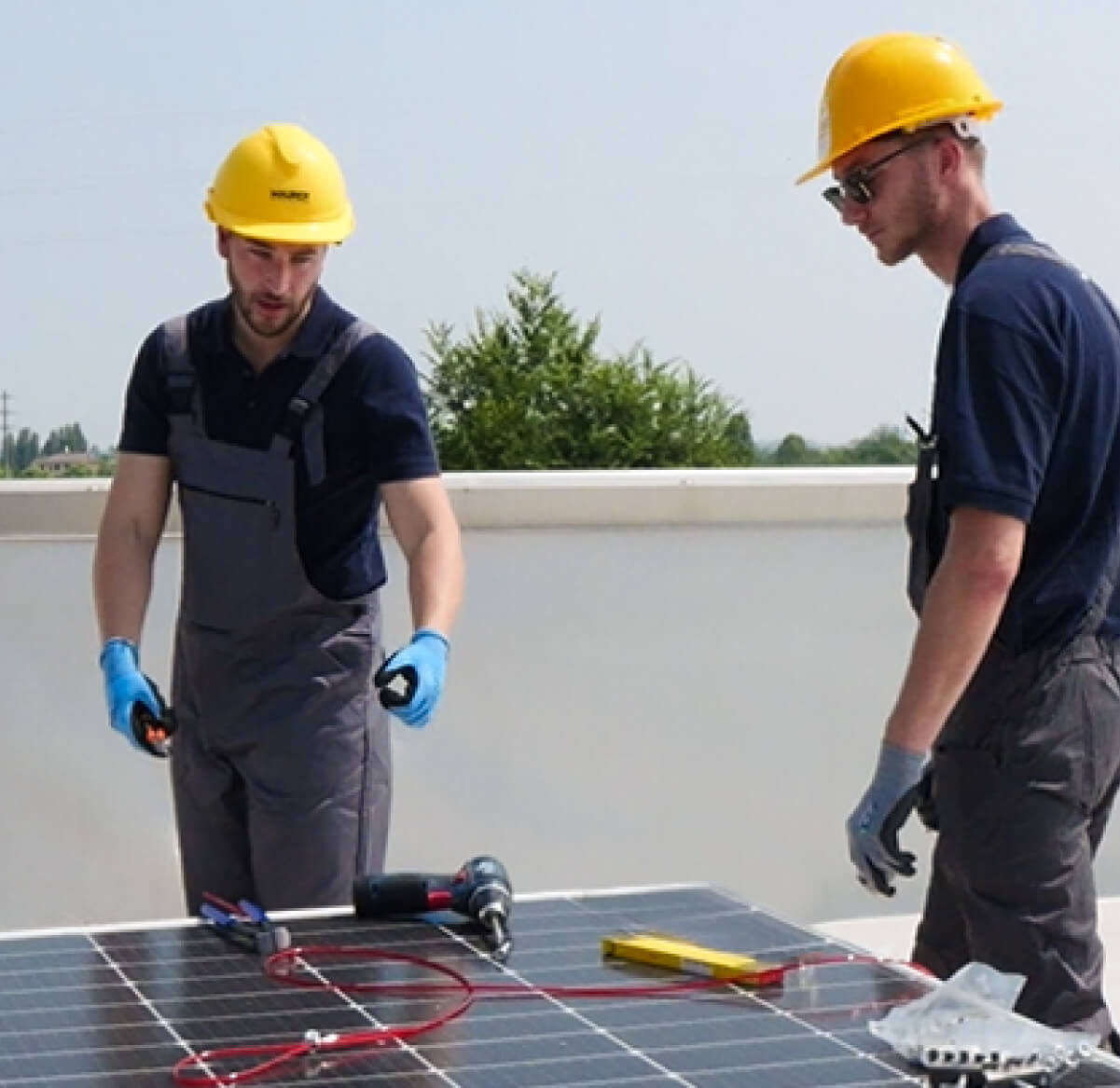
From an installer’s perspective, layouts that minimize unique parts and keep a consistent module
geometry speed up assembly and reduce errors. For engineers, having reliable technical support,
tested solutions, and clear sizing inputs makes calculations faster and safer. Add practical
details—service walkways, safe distances from roof edges, and tidy cable management—and your
solar panels layout becomes not only efficient, but also maintainable and compliant.
A Practical Route to Faster Installs:
Standardized Ballasted Layouts with Technical Support
If your priority is to install more projects with fewer headaches,
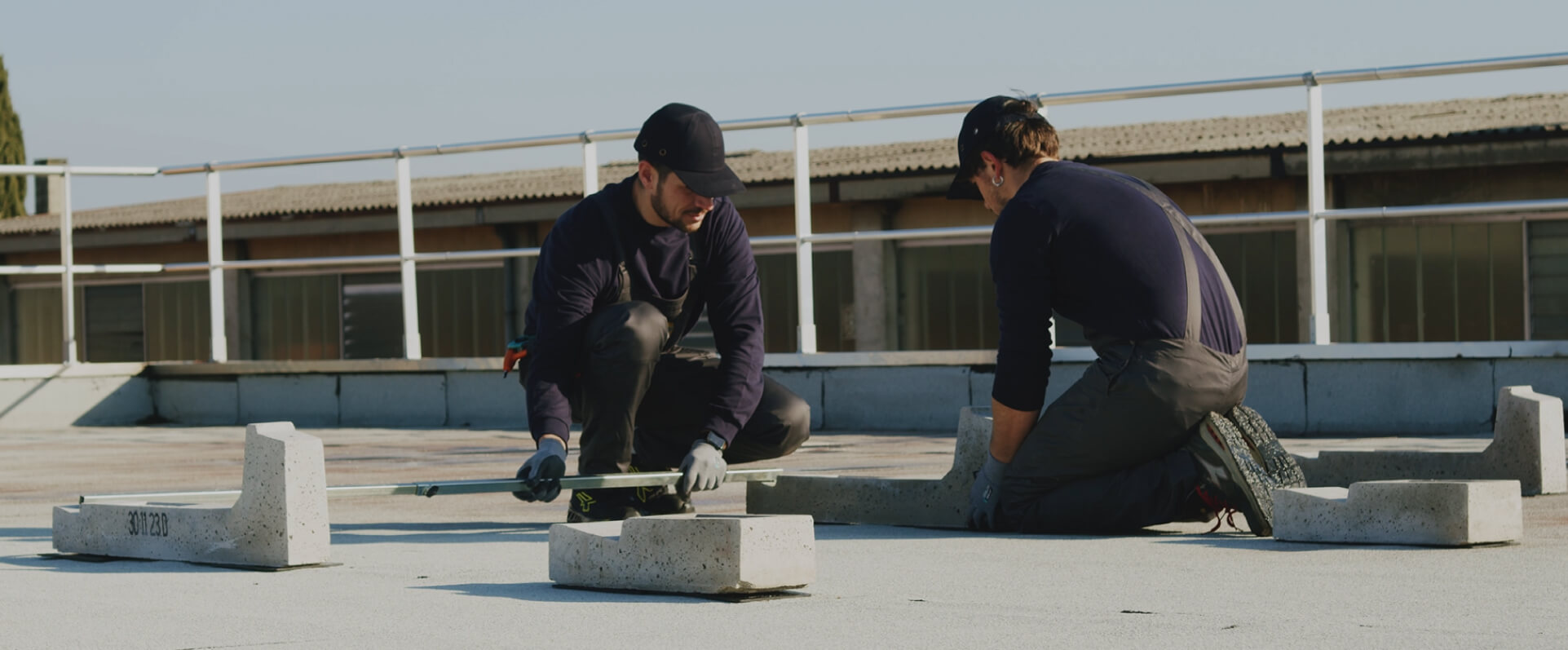
choose a solar panels layout built around simplicity and predictability. Ballasted mounting with
precast concrete supports can turn flat-roof PV into a repeatable process: place, align, secure
modules, and move on—without penetrating the roof. That means fewer surprises, faster site
progress, and a cleaner handover. For designers, the best results come from combining layout
optimization with proper system sizing: define the target kWp, select the tilt and orientation,
map shading and obstacles, and then validate loads and wind exposure. A technical partner
approach makes a real difference here—support during design, assistance with dimensioning, and
guidance that follows the project through execution. Distributors benefit too, because solutions
that are easy to explain and quick to install are easier to sell and generate consistent demand.
Ultimately, a high-performing solar panels layout is not only about energy: it’s about reducing
complexity, protecting the roof, and delivering a durable system that clients can trust. If you
work on Italian flat roofs, prioritize layouts that are engineered, tested, and
installer-friendly—so every job is faster, safer, and more profitable.