Solar panels flat roof: the smarter way to
build PV on Italian rooftops
Installing solar panels flat roof systems in Italy often comes
down to one challenge: getting a secure structure without turning the roof into a problem. Flat
roofs are common on warehouses, factories, logistics hubs, and commercial buildings, but
waterproofing layers and membranes can make traditional penetrations risky and time-consuming.
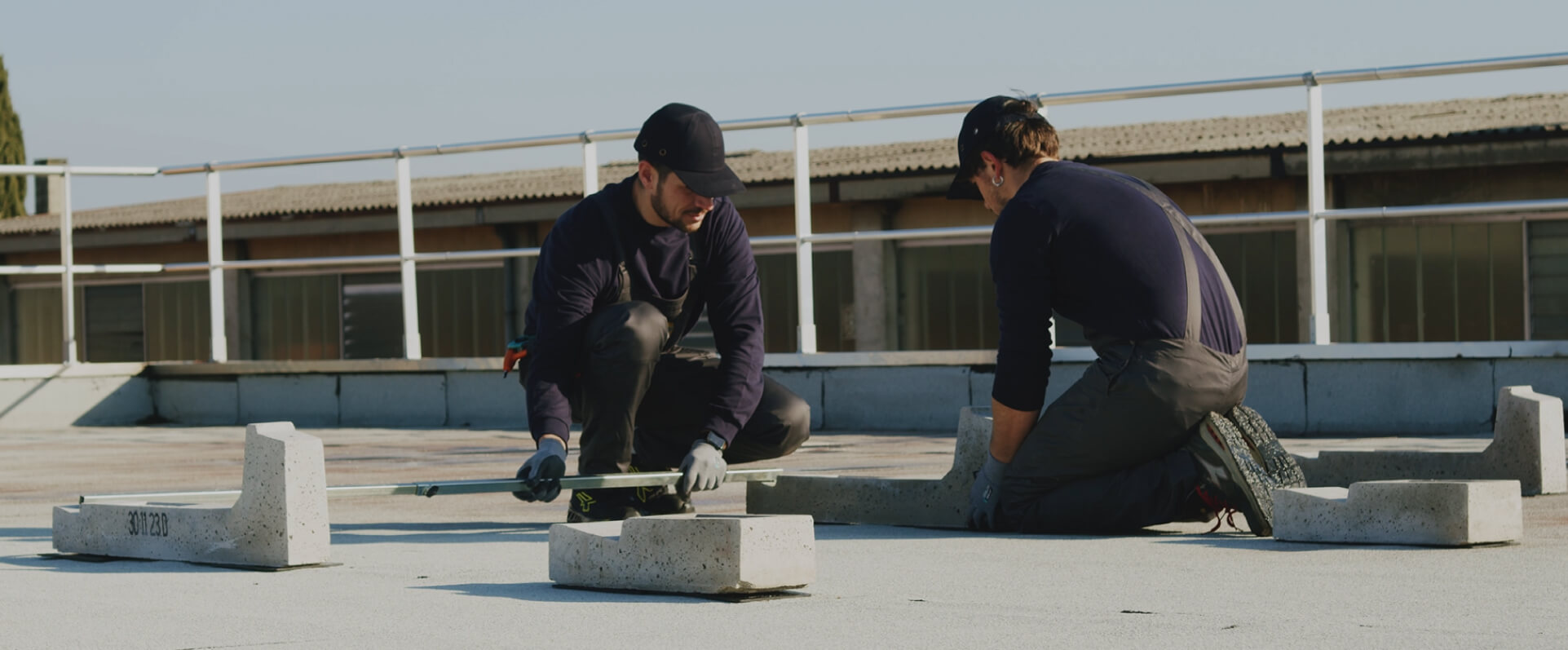
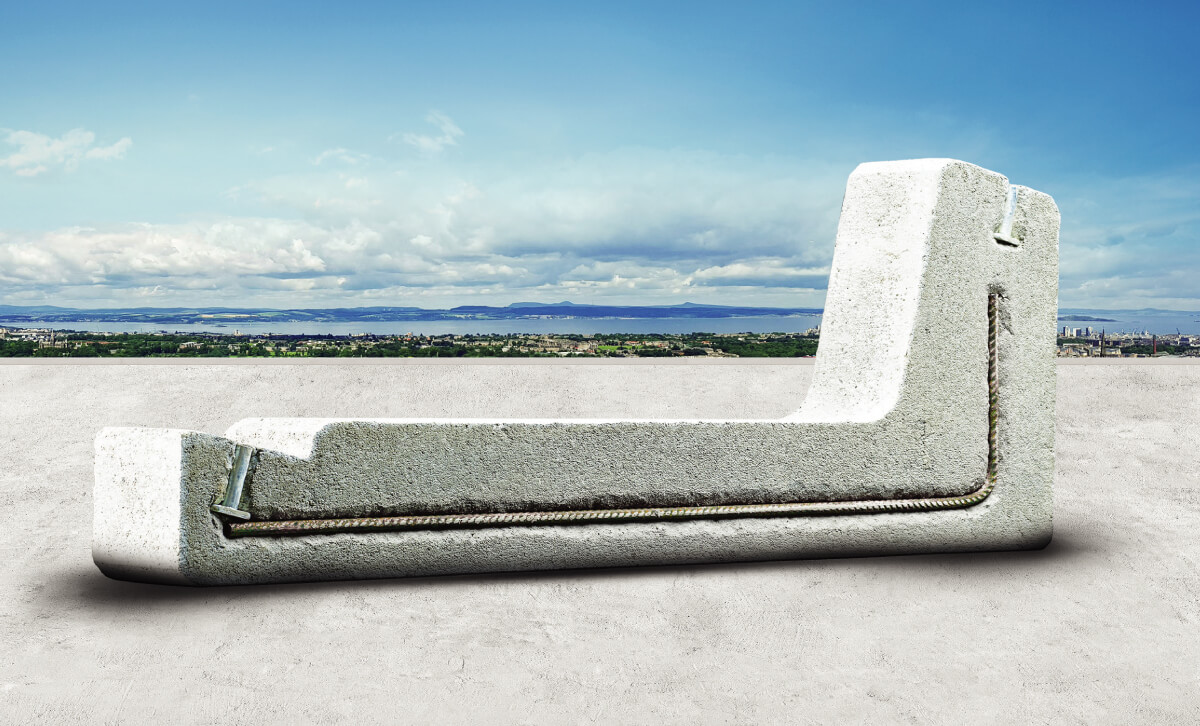
That’s why ballast-based mounting has become a go-to approach for many professionals. By using
engineered concrete weights, the PV array can be fixed in place without drilling the roof
surface, reducing leak risk and simplifying site work. For installers, this means fewer
components to handle, faster layout, and less uncertainty during commissioning. For designers
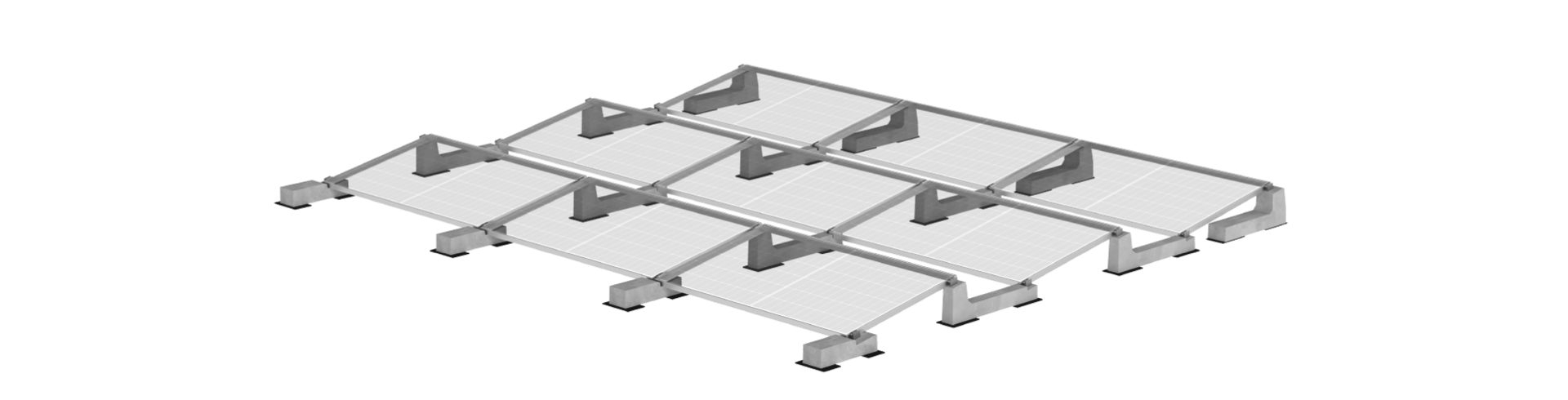
and engineers, it means predictable dead loads, clear configuration options (tilt angles, row
spacing, orientation), and easier integration with wind calculations. In real projects, speed
matters: fewer on-roof operations, fewer tools, and less dependency on weather windows can
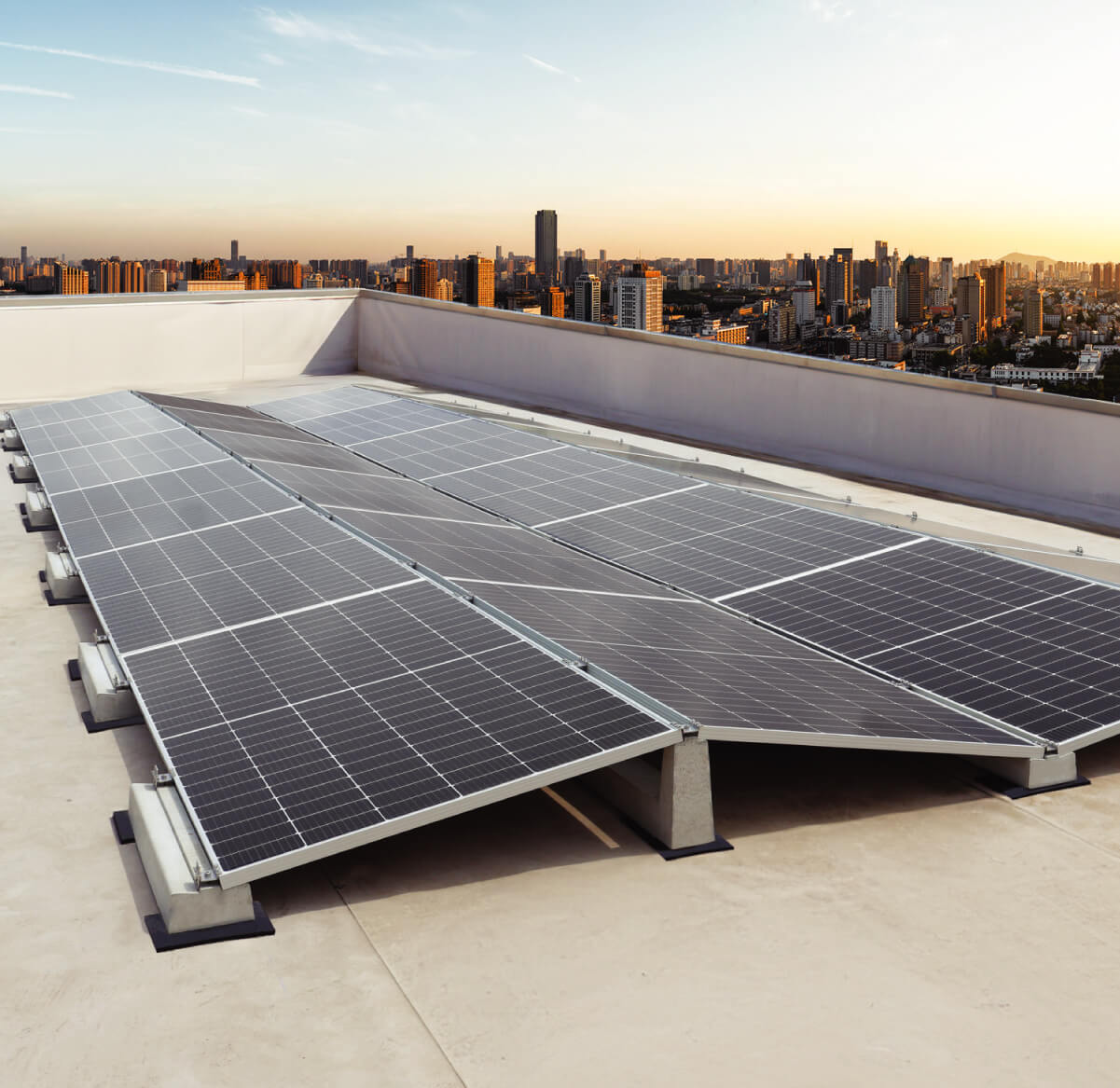
translate into better margins and happier clients. A well-designed flat roof PV mounting system
also supports clean cable management, consistent panel alignment, and maintainable walkways. If
your goal is to deliver a reliable photovoltaic system with minimal disruption, choosing a
dedicated flat-roof solution is not a minor detail—it’s the foundation of a safe, bankable
installation that performs for decades.
No drilling, fewer risks: why ballast mounting
wins on flat roofs
The biggest pain point with solar panels flat roof projects is
often the interface with the roof itself. Penetrations can introduce waterproofing liabilities,
require additional sealing work, and extend installation times—especially on large industrial
roofs. Ballasted PV structures address this directly: the array is held by weight and smart
geometry, helping limit uplift while protecting the membrane. This approach can reduce
administrative friction too, because many building owners are cautious about any roof warranty
impact. From an installer’s perspective, a system designed around concrete ballasts can mean
quick positioning, repeatable assembly steps, and less chance of on-site surprises. From a
technical standpoint, having tested solutions with defined load paths supports more confident
design decisions. Key related factors—wind load, roof load capacity, friction coefficients,
parapet height, and exposure category—can be assessed with dedicated technical support so the
final layout is both safe and efficient. When every hour on the roof costs money, a streamlined,
non-penetrating mounting strategy can be the difference between a smooth project and a stressful
one.
A complete professional workflow: from sizing
to execution
A strong solar panels flat roof solution is not just a
product—it’s a process that helps professionals deliver consistent results. The most effective
workflows start with technical pre-design: defining the array geometry, checking structural
constraints, and selecting the best tilt and configuration for yield and shading control. Then
comes system sizing and verification: wind actions, ballast distribution, and roof load checks,
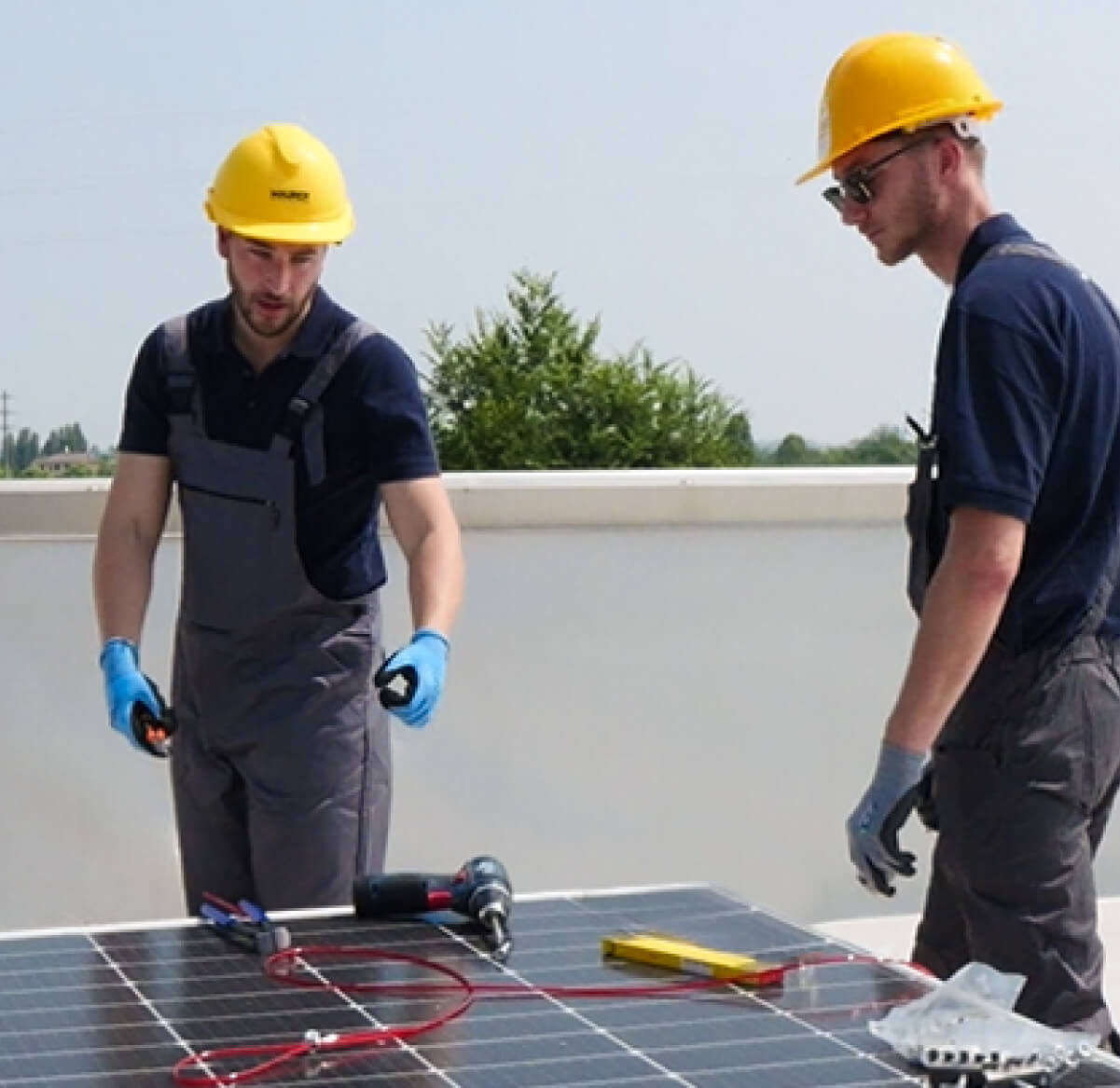
supported by reliable data and proven components. Finally, execution should be straightforward:
intuitive assembly, minimal parts, and clear documentation that keeps crews aligned. This is
where a technical partner approach makes the difference for B2B stakeholders in Italy—installers
who want speed and simplicity, engineers who need dependable parameters, and distributors who
value a solution that’s easy to specify and sell. By choosing a dedicated flat-roof mounting
method built around concrete ballast supports, you can reduce complexity, cut installation time,
and protect the roof—while delivering a durable PV plant that meets expectations from day one
and stays stable in real-world conditions.