Why a Solar Panel Ballast Calculator Matters
on Italian Flat Roofs
On flat roofs across Italy, photovoltaic systems often live or die
by one detail: correct ballast sizing. A solar panel ballast calculator helps installers and
designers estimate how much counterweight is needed to keep modules stable under wind uplift,
while respecting roof load limits and project constraints. That means fewer surprises on site,
fewer last-minute changes, and a safer installation from day one.
For many projects, the real challenge isn’t choosing the panel—it’s balancing wind exposure,
building height, parapet presence, tilt angle, row spacing, and the roof’s structural capacity.
A reliable calculator turns these variables into a clear ballast plan, supporting faster
decision-making and cleaner documentation for engineering files. It’s also essential when you
want a non-penetrating solution: no drilling, no waterproofing risks, and less chance of future
leaks.
If you work in B2B solar—especially as an installer—you already know how costly delays can be.
Having a solid ballast estimate before materials arrive helps you plan logistics, reduce
components, and keep the crew moving. For designers, it adds confidence: better traceability,
more consistent assumptions, and a smoother path from preliminary layout to execution. In short,
a solar panel ballast calculator isn’t just a tool; it’s a practical way to reduce complexity
and increase reliability on flat-roof PV systems in the Italian market.
What to Look for in a Ballast Calculation Tool
(Beyond the Numbers)
Not all calculation tools are equally useful on site. The best
solar panel ballast calculator should reflect real installation conditions and speak your
language as a professional: clear inputs, transparent assumptions, and outputs that match how
you actually build.
Key elements to evaluate include: wind zoning and exposure, edge and corner effects, module
orientation (portrait/landscape), tilt configuration, and roof type. You also want the ability
to model different array zones, because perimeter areas typically require higher ballast than
central fields. A good tool should support load distribution logic too—how weight is transferred
to the roof surface—and help you check whether the solution remains within allowable roof loads.
Equally important is speed. When you’re quoting or refining a layout, you don’t have time for
guesswork. A practical calculator supports quick iterations: adjust tilt, change spacing,
confirm stability, and immediately see how ballast requirements respond. For engineering teams,
the value is documentation: consistent results that can be reviewed, shared, and aligned with
project responsibilities.
Finally, the best outcomes come when calculation is paired with technical support—someone who
can validate assumptions, propose tested configurations, and help finalize the design before you
commit to procurement and installation.
From Calculation to Installation: Faster,
Safer, Non-Penetrating Flat-Roof PV
A solar panel ballast calculator is most valuable when it leads to
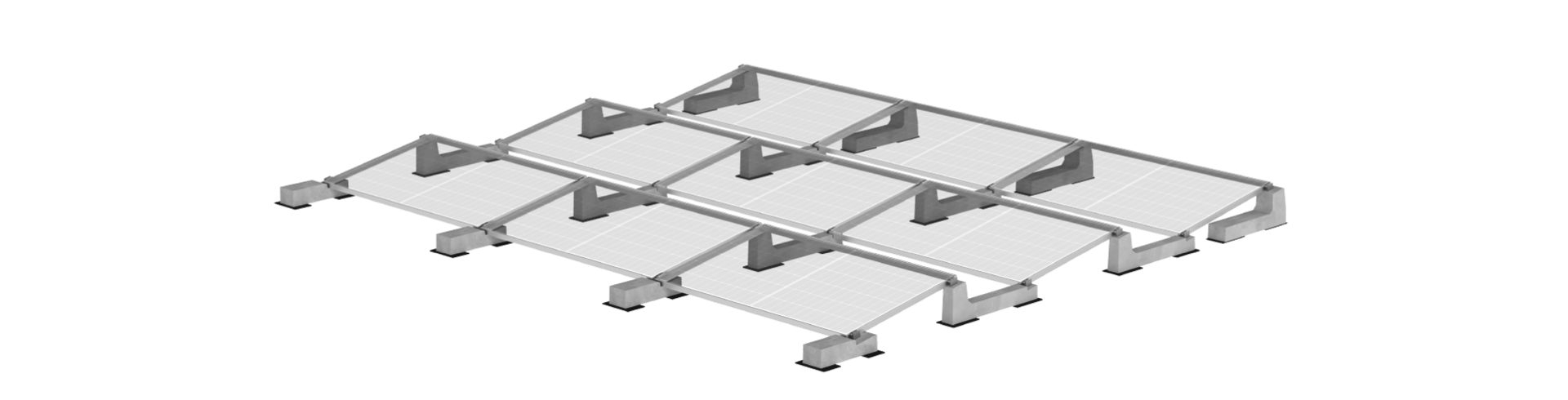
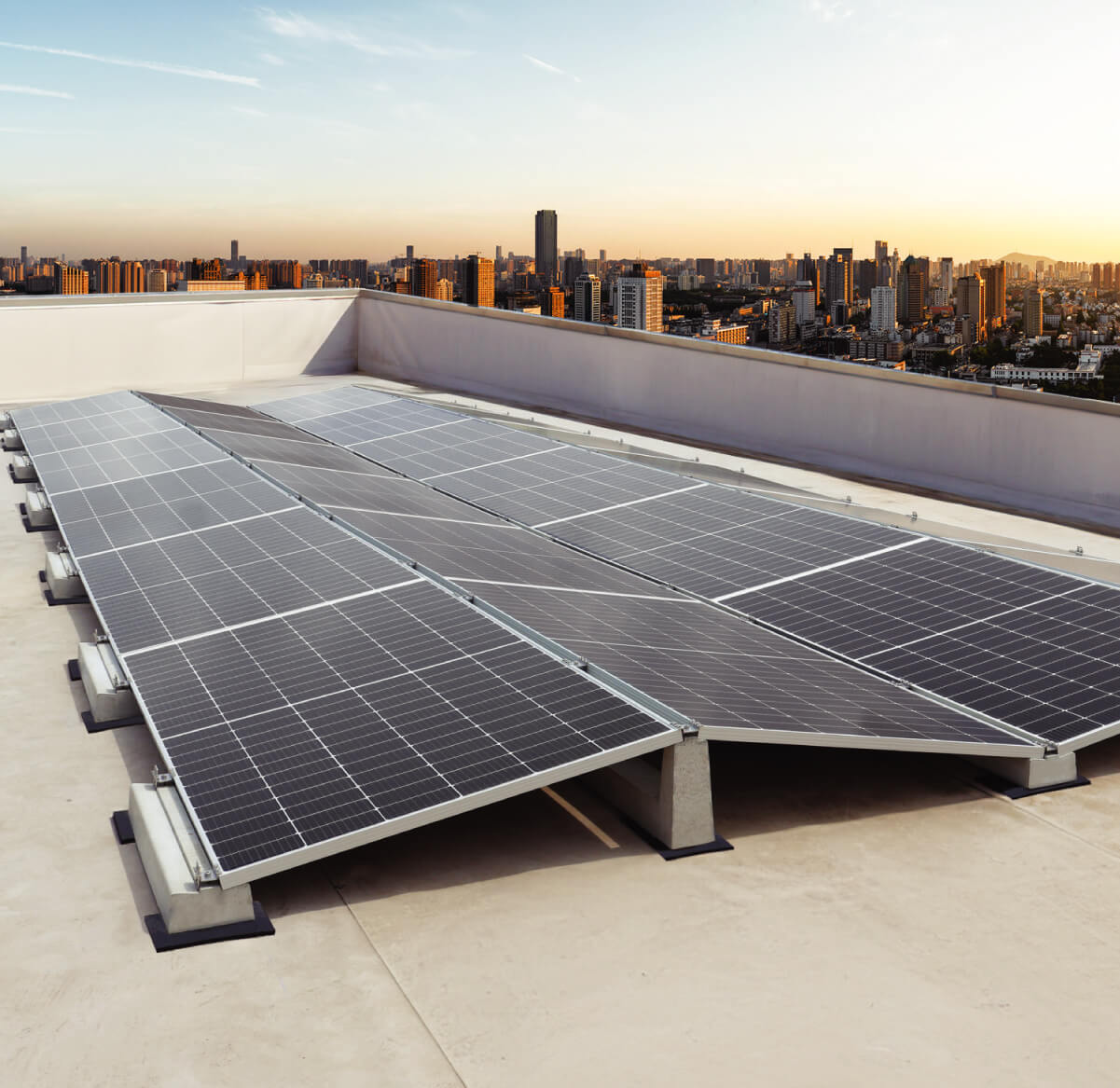
a buildable, low-risk solution. On flat roofs, non-penetrating concrete ballast systems are a
proven way to simplify installation: fewer parts, no roof perforations, and a cleaner workflow
for crews. Once ballast is correctly sized, installers can focus on execution instead of
troubleshooting.
For Italian projects, this approach supports three priorities professionals care about:
reliability, simplicity, and efficiency. Correct ballast sizing helps reduce on-site
adjustments, keeps arrays stable under wind events, and limits the risk of exceeding roof load
constraints. It also improves planning: you can estimate material quantities, lifting needs, and
installation timing more accurately.
If you’re an installer, the advantage is immediate—quicker installs and fewer roof-related
liabilities. If you’re a designer or engineer, you gain confidence through repeatable sizing and
tested configurations. And for distributors, it’s easier to propose a solution that’s
recognizable, in demand, and supported by solid technical data.
When your next flat-roof PV job requires speed without compromising safety, start with the solar
panel ballast calculator, then align the results with a tested ballast solution and professional
design support. That combination keeps projects moving and helps you deliver a stable, leak-free
system with fewer complications.