Why installers in Italy choose a solar
mounting hardware manufacturer that simplifies flat-roof PV
In Italy’s fast-moving PV market, installers and EPC teams don’t
just need components—they need a system that keeps jobs predictable. Choosing the right solar
mounting hardware manufacturer can be the difference between a smooth installation and days lost
to extra parts, roof constraints, and unexpected on-site fixes. For flat roofs, the biggest
headache is often waterproofing: drilling and anchoring can introduce risk, paperwork, and
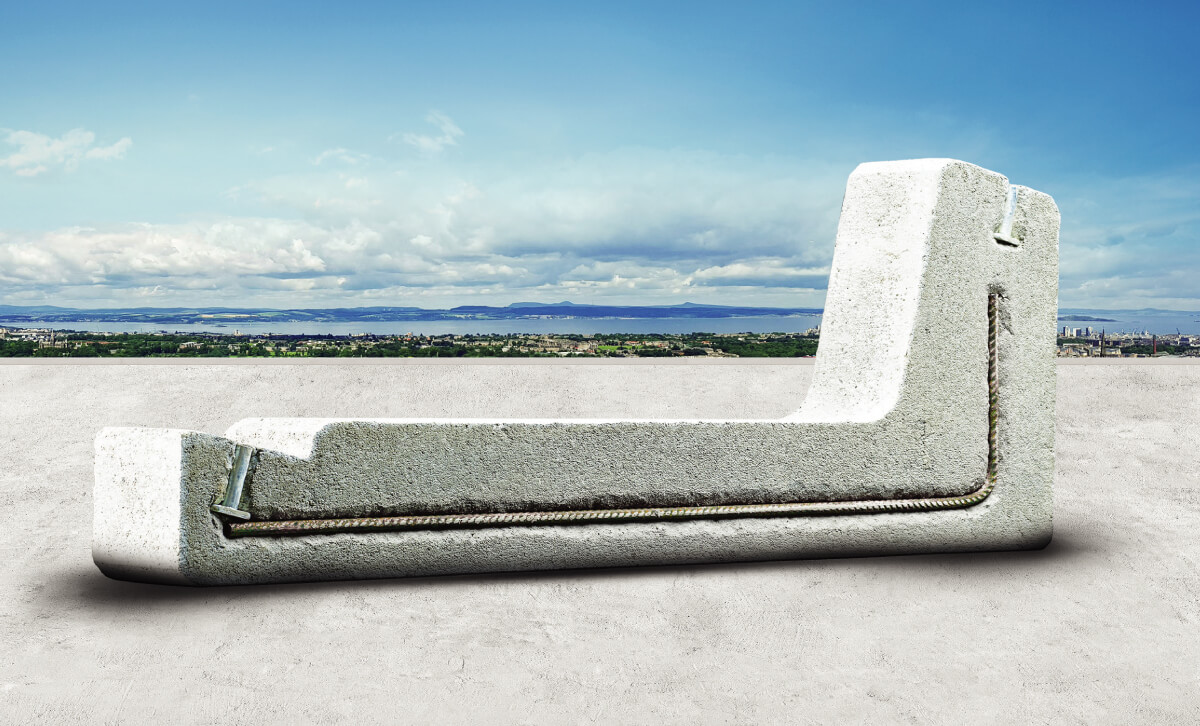
call-backs. That’s why non-penetrating mounting solutions based on concrete ballast are gaining
momentum across industrial buildings, warehouses, and commercial rooftops. A well-designed
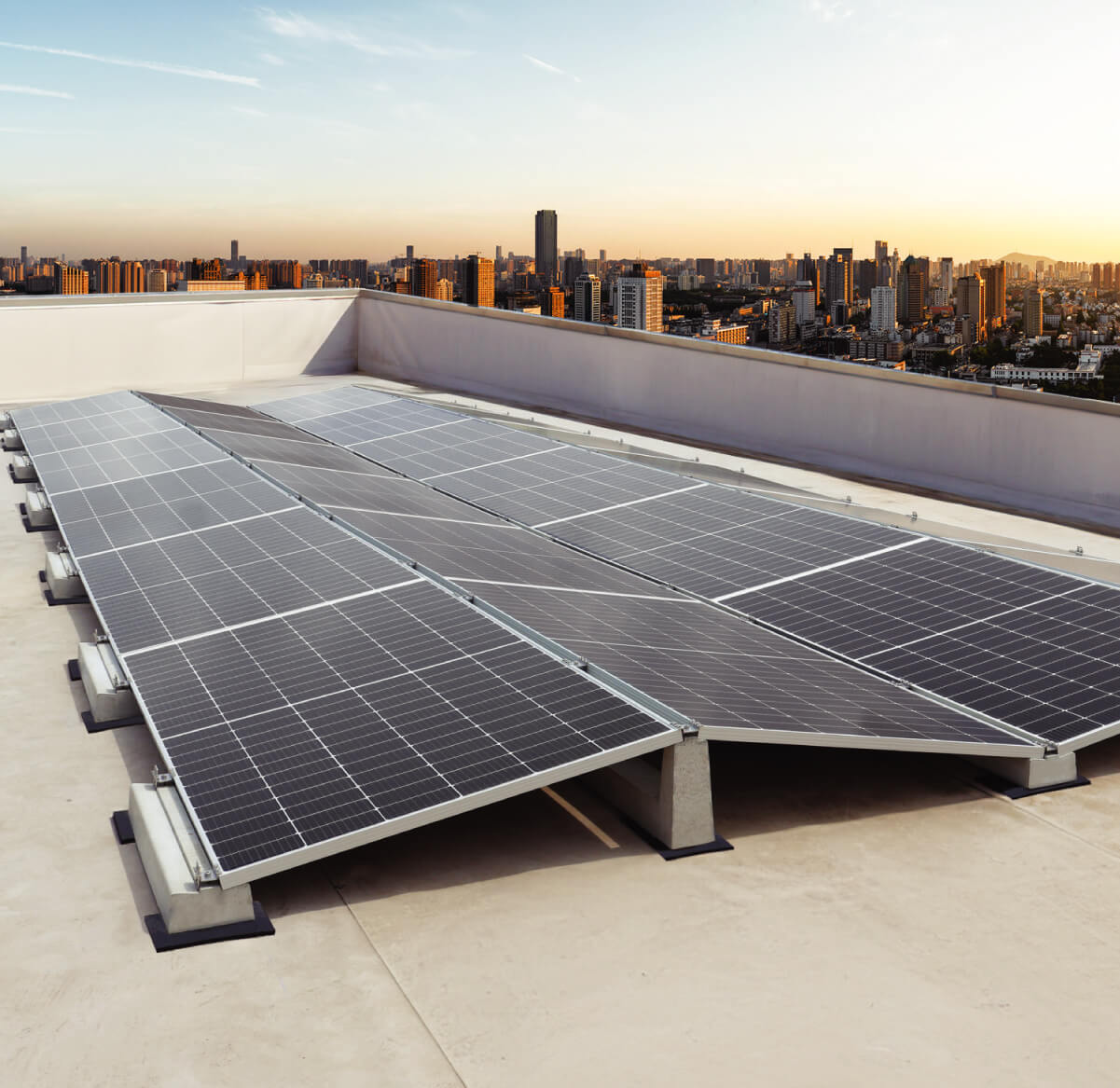
ballasted racking system reduces complexity because the structure is engineered to sit securely
without roof perforation, helping protect the membrane and speed up layout. For installers,
fewer roof interventions means fewer variables: quicker positioning, cleaner logistics, and
simpler crew training. For designers and engineers, tested configurations and reliable technical
data make it easier to manage wind loads and roof weights with confidence. And for distributors,
a recognizable, easy-to-sell solution backed by technical and commercial assistance supports
steady demand. If your goal is to install more systems per month, reduce site risk, and deliver
consistent results on flat roofs, working with a specialized Italian solar mounting hardware
manufacturer focused on ballasted supports can be a practical advantage—especially when the
support goes beyond the product and includes project development up to execution.
Concrete ballast solar mounting: fewer parts,
no roof drilling, faster jobs
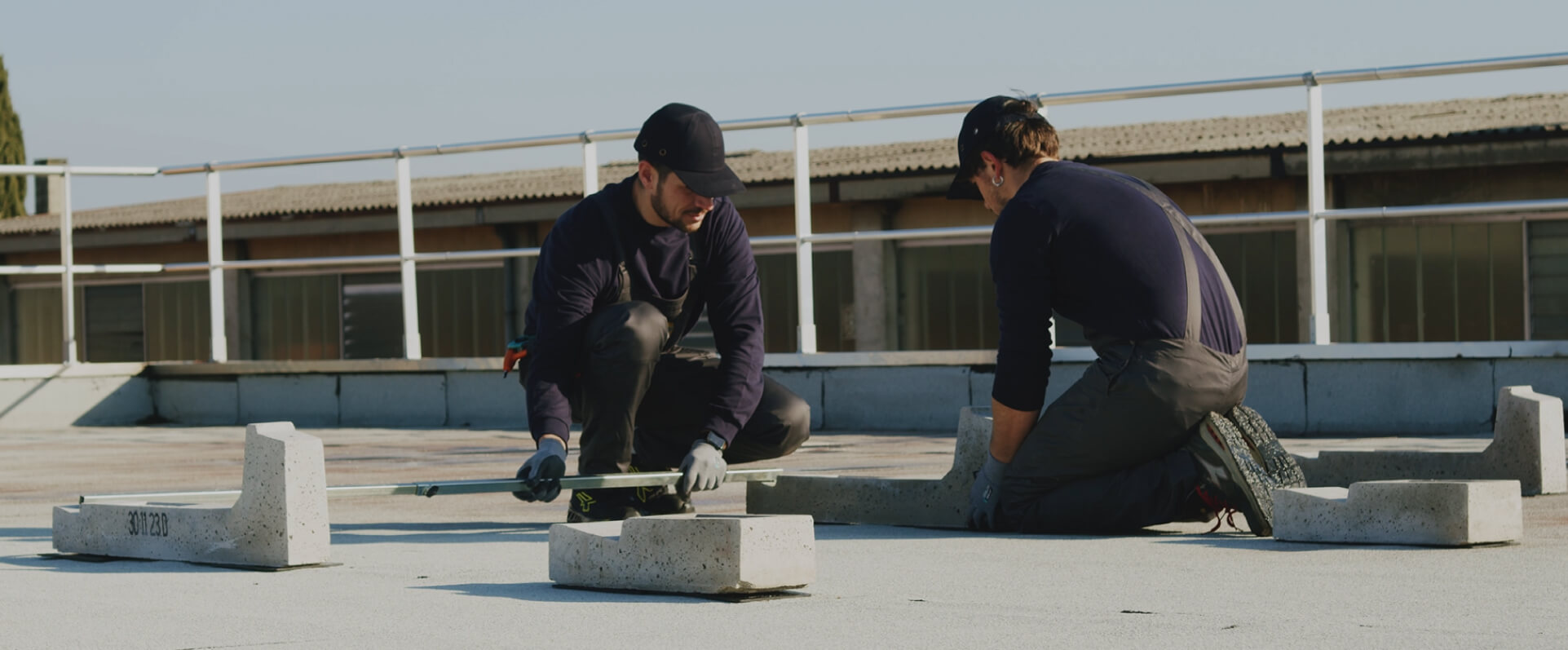
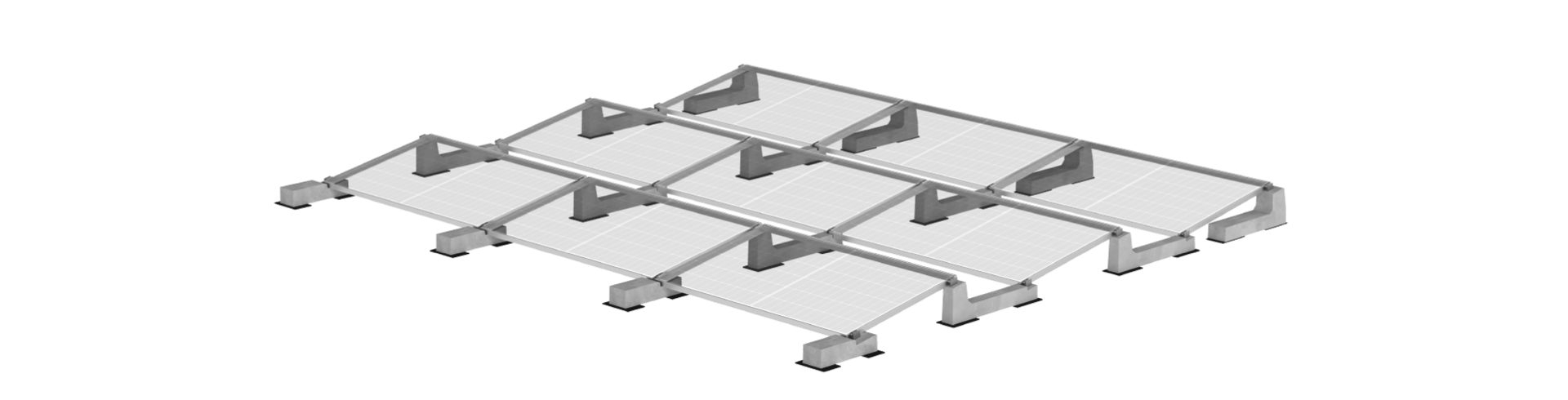
Ballasted PV mounting for flat roofs is built around a simple
idea: stability through weight and smart geometry, not roof penetrations. Concrete ballast
blocks are pre-engineered to hold modules at the required tilt while keeping the array secure
under wind action. This approach can cut installation time because crews avoid drilling,
sealing, and complex anchoring layouts. With fewer components to manage, on-site mistakes drop
and stock handling becomes easier. For many flat-roof projects, a ballasted solar racking system
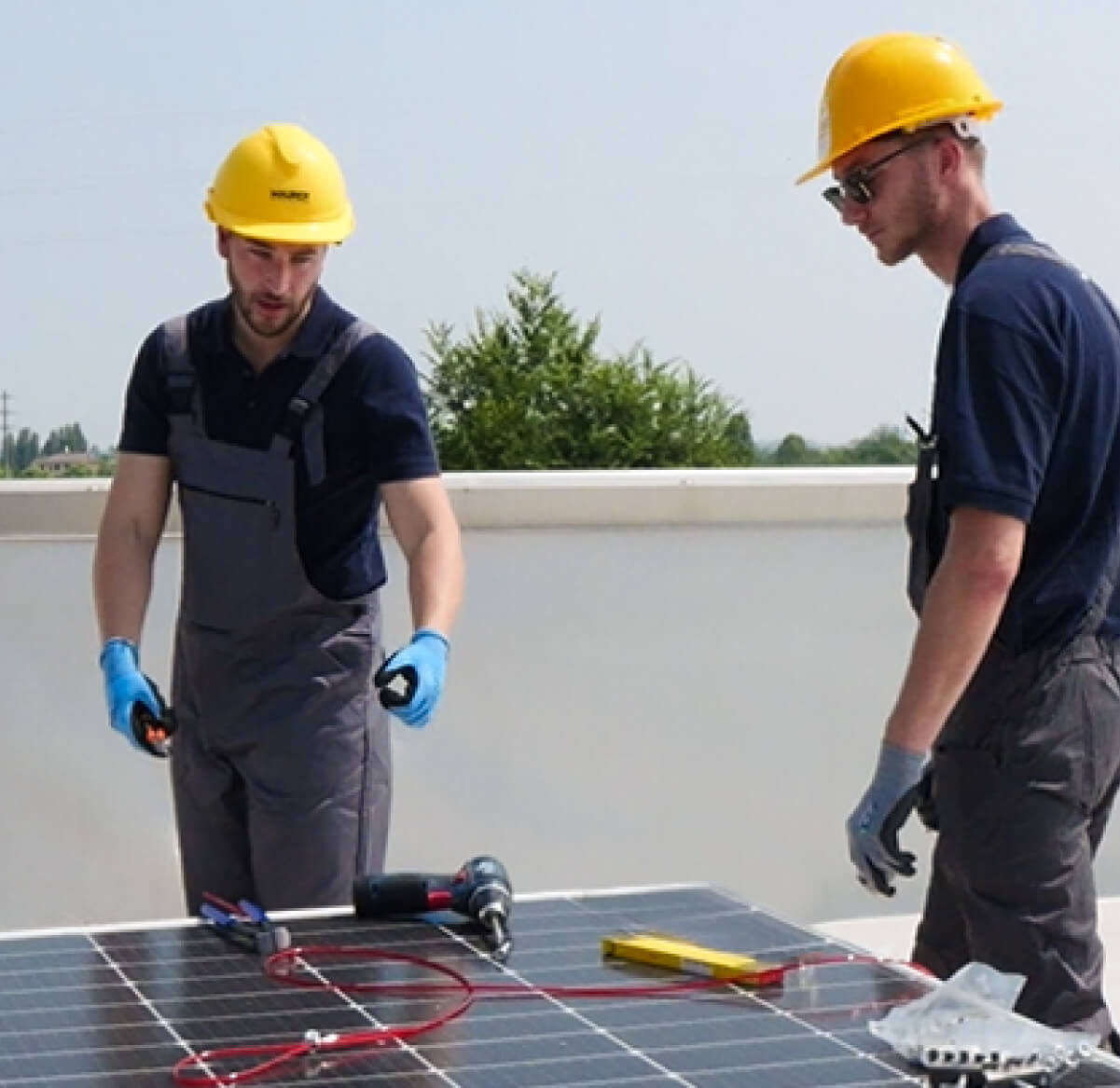
also helps streamline safety and scheduling, since the workflow is repeatable: set out, place
supports, align rows, clamp modules, and finalize cabling. When you source this solution from a
solar mounting hardware manufacturer with a dedicated focus on flat roofs, you typically get
optimized designs, compatible hardware, and field-proven configurations—important for keeping
performance and reliability consistent across different roof types.
Engineering support and sizing: what to expect
from the right B2B partner
For professionals, the best value often comes from support that
starts before materials arrive on site. A strong solar mounting hardware manufacturer should
provide technical assistance during design, help with plant sizing, and deliver clear
documentation for wind and load checks. This reduces engineering uncertainty and supports faster
approvals. Commercially, responsive pre-sales help and project follow-through simplify
procurement and keep timelines under control. In practice, that means installers get answers
quickly, designers receive dependable inputs for calculations, and distributors can rely on
stable supply and a solution that’s easy to explain. If you’re building PV on flat roofs in
Italy and want a system that balances speed, safety, and long-term durability, prioritize a
manufacturer that combines non-penetrating ballast technology with tested performance,
continuous innovation, and real technical partnership.