Why PV Racking for Industrial Applications
Needs a Smarter Flat-Roof Approach
Choosing pv racking for industrial applications is rarely just a
hardware decision. On Italian industrial buildings—warehouses, logistics hubs, production
sites—flat roofs demand speed, safety, and predictability. Installers want to finish more jobs
with fewer surprises; designers need verified load data and wind uplift checks; distributors
prefer solutions that are easy to specify and repeat. That’s why non-penetrating racking has
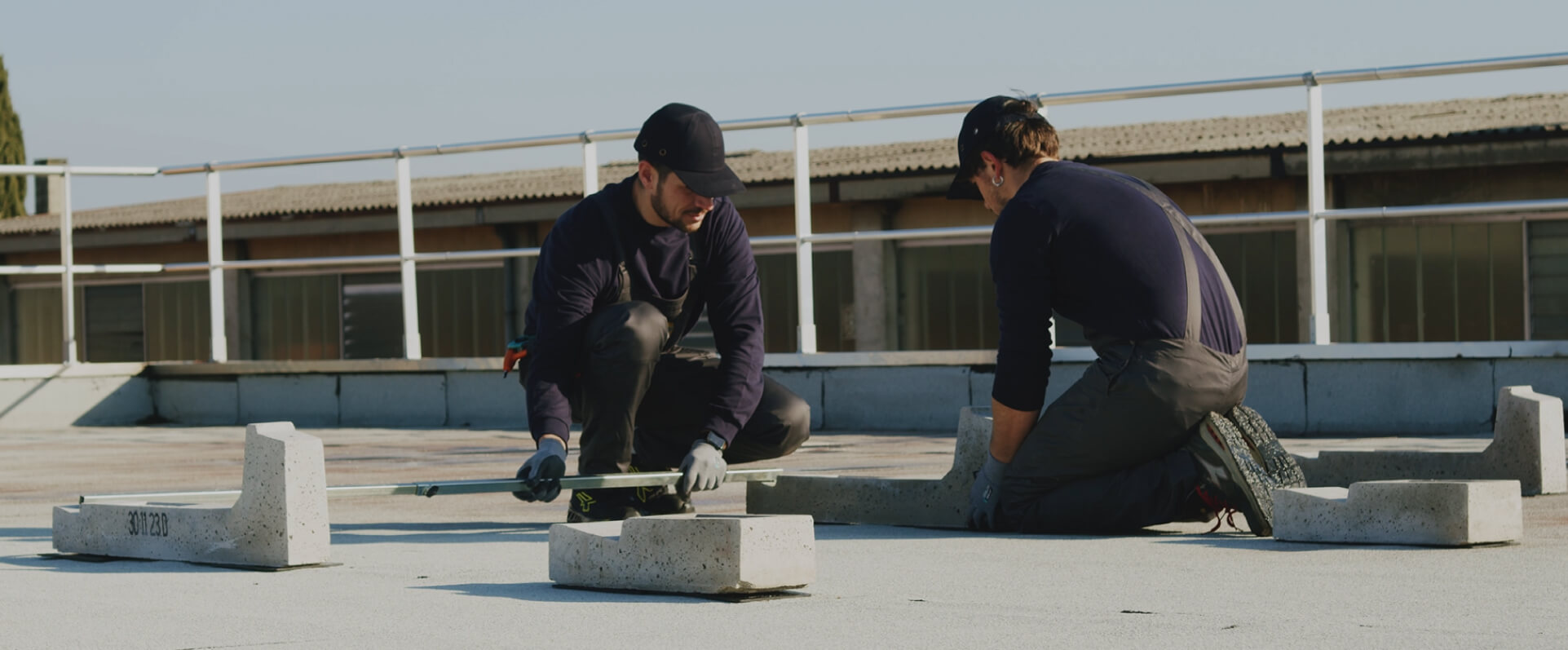
become a go-to option in many rooftop PV projects. Instead of drilling the waterproof membrane,
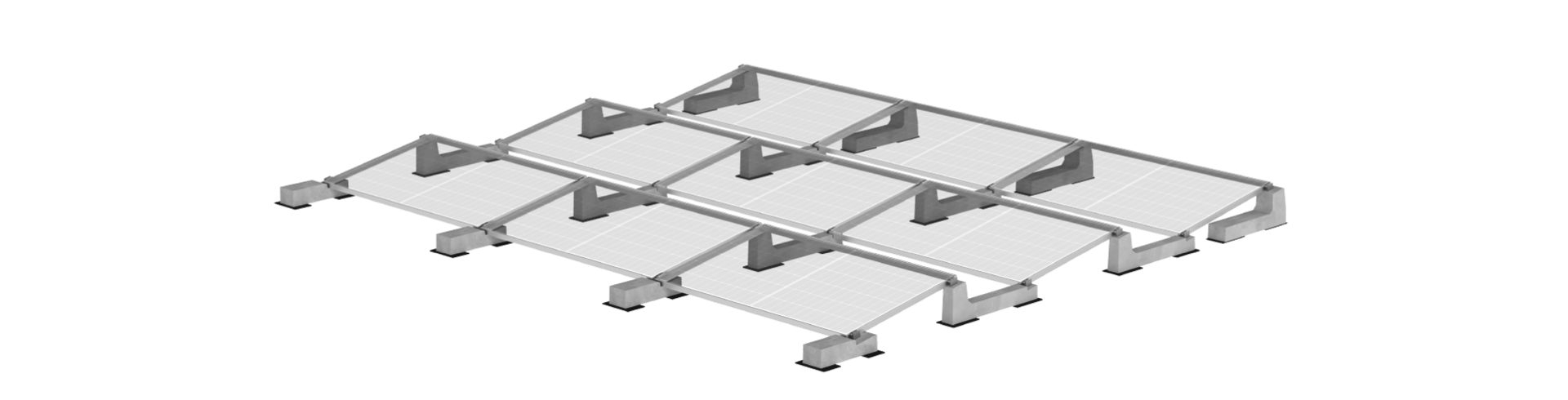
a ballast-based structure uses pre-engineered concrete supports to keep modules stable while
protecting the roof. The practical impact is immediate: fewer components to handle, simpler site
logistics, and shorter installation times, especially on large surfaces. For industrial PV,
downtime and access constraints matter—so a system that can be positioned quickly, aligned
easily, and adapted to different layouts makes a real difference. It also reduces the risk of
leaks over time, an issue that can turn a good project into an expensive maintenance problem.
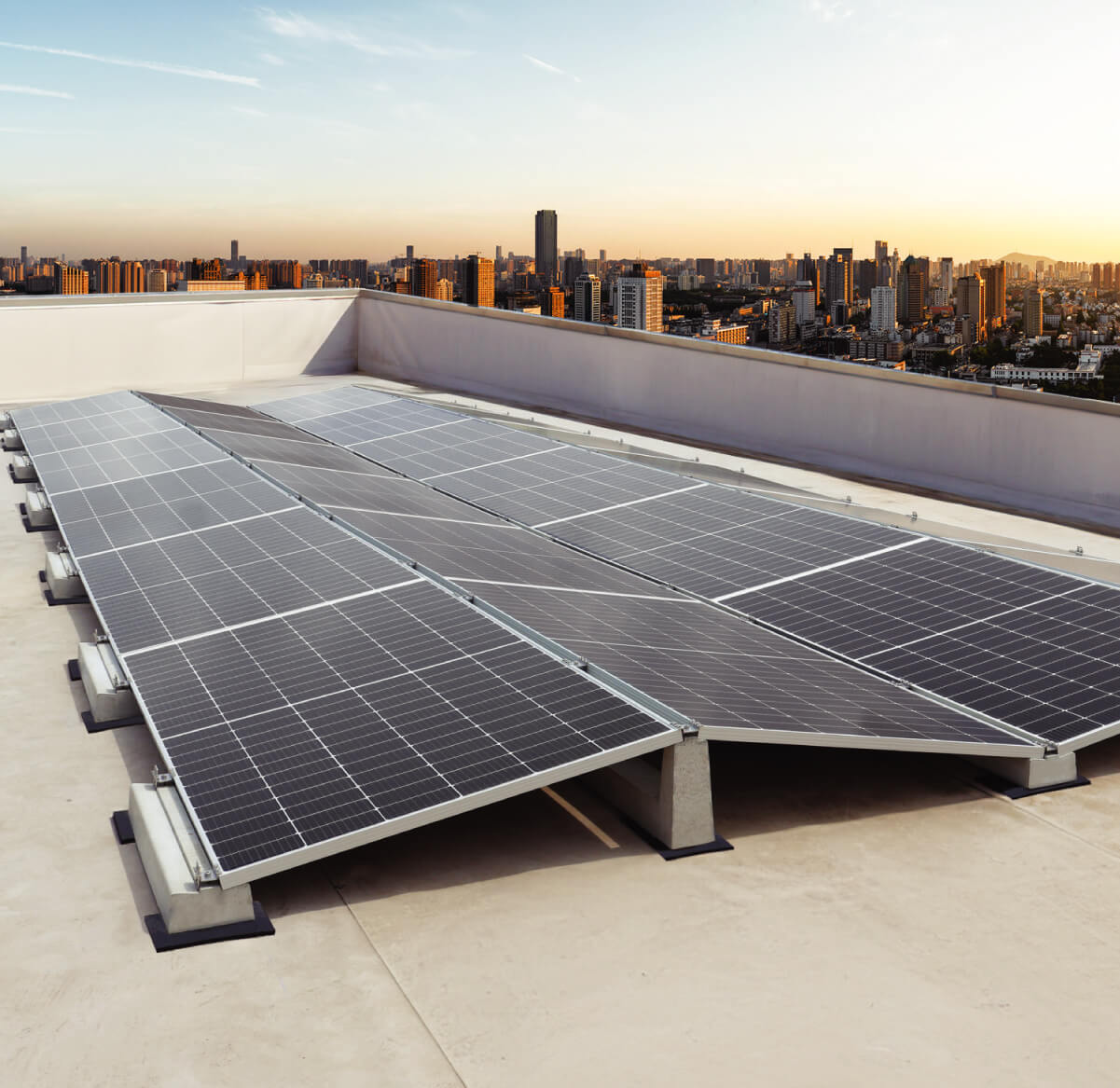
When pv racking for industrial applications is designed specifically for flat roofs, it supports
consistent module tilt, orderly cable management, and scalable arrays—without forcing complex
substructures. The result is a cleaner workflow for crews and a more dependable outcome for
asset owners. If your priority is a robust flat-roof PV installation that balances speed and
reliability, ballast racking is a strong starting point.
Key Benefits Installers and Engineers Look For
In industrial rooftop PV, performance starts with installation
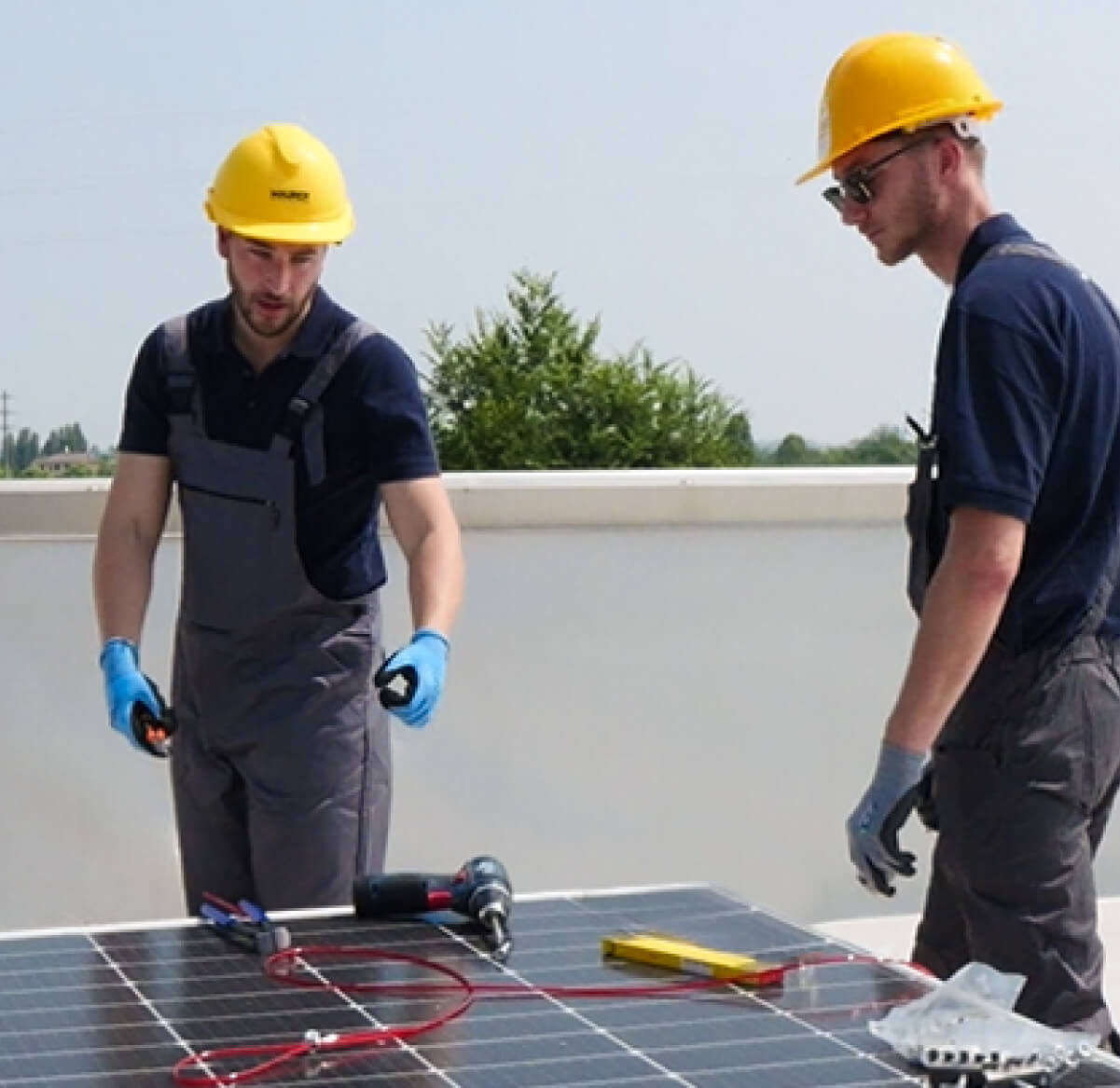
efficiency. The best pv racking for industrial applications minimizes steps on site: pre-defined
components, intuitive assembly, and repeatable positioning across long rows. A ballast solution
helps because it avoids roof penetrations, reducing both paperwork and on-site risk management.
For installers, that means fewer critical points to seal, fewer tools, and fewer delays caused
by weather-sensitive waterproofing work.
Engineers and technical offices focus on structural integrity: wind load, roof load
distribution, and compliance documentation. Ballasted PV racking can support these requirements
through tested configurations and reliable sizing inputs for project design. This is
particularly relevant in Italy, where varying wind zones and building conditions can complicate
calculations. Having technical support during the design phase—along with clear data for
dimensioning—can reduce uncertainty and the responsibility burden on the designer.
From a commercial standpoint, a racking system that’s easy to explain and quick to quote is also
easier to stock and sell. When pv racking for industrial applications comes as a complete,
clearly structured solution—covering design assistance, layout development, and execution
support—it becomes more than a product. It becomes a practical method for delivering industrial
PV with fewer variables.
How to Choose the Right Racking for Your Next
Industrial PV Project
To select pv racking for industrial applications, start with three
questions: Do you need to avoid roof penetrations? Do you need to accelerate installation on
large flat surfaces? Do you need dependable technical backing for wind and load sizing? If the
answer is yes, prioritize a ballast-based, flat-roof-specific system designed around concrete
weights and simplified assembly.
Look for solutions that reduce component count, keep roof protection intact, and offer
flexibility for different module orientations and tilts. In practice, that means smoother
planning, faster on-site execution, and fewer post-installation issues—especially important for
industrial facilities that can’t afford disruptions. Also consider the value of a technical
partner: support in the design phase, assistance with dimensioning, and guidance through to
installation can shorten decision cycles and improve overall project quality.
Ultimately, pv racking for industrial applications should help you deliver a safer, cleaner, and
more efficient flat-roof PV plant. For installers, it’s about speed and simplicity; for
designers, it’s about verified performance; for distributors, it’s about reliability and
repeatable demand. Choose a racking approach that aligns with all three—and your next industrial
rooftop project in Italy will be easier to build and easier to stand behind.