Flat Roof Solar: Faster Installations Without
Compromising the Roof
Flat roof solar projects in Italy are booming, but the real
challenge starts on site: you need a mounting solution that installs fast, stays secure, and
doesn’t turn the waterproofing layer into a risk. That’s why ballast-based PV mounting is
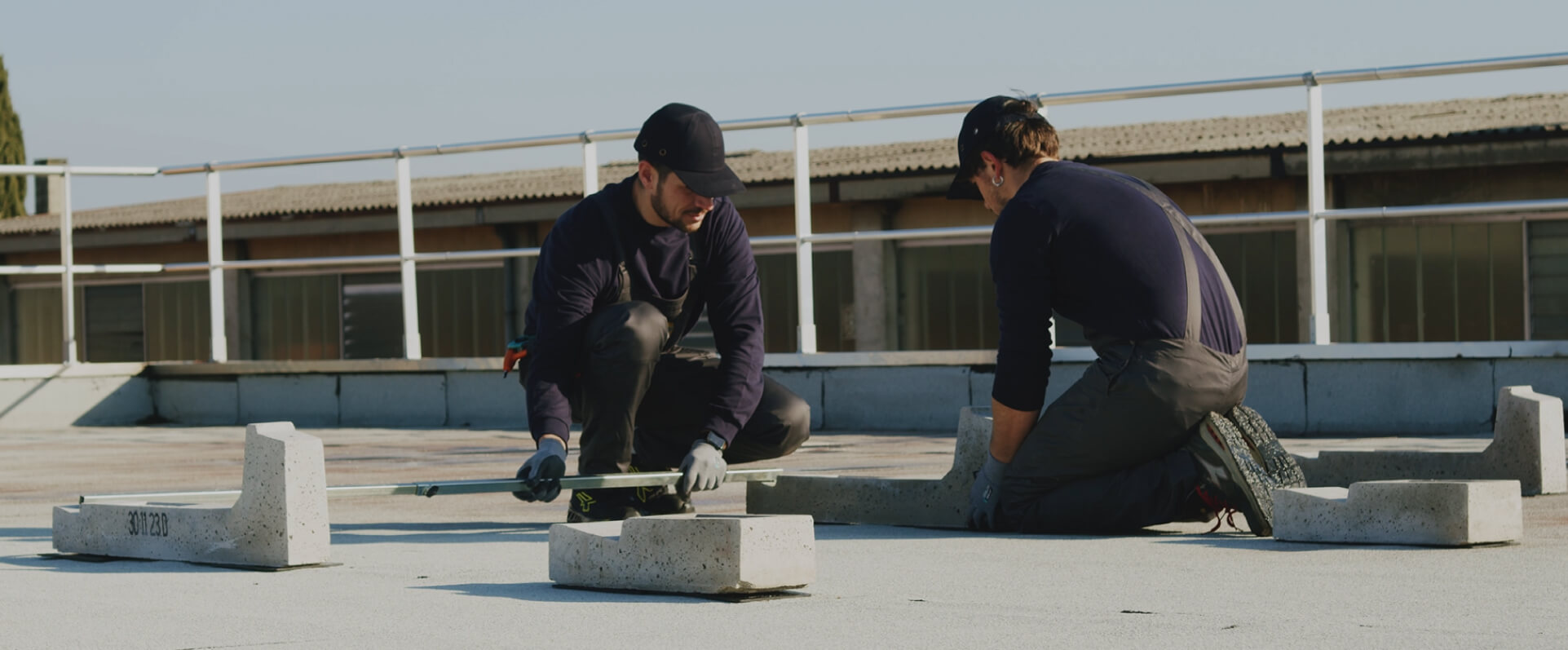
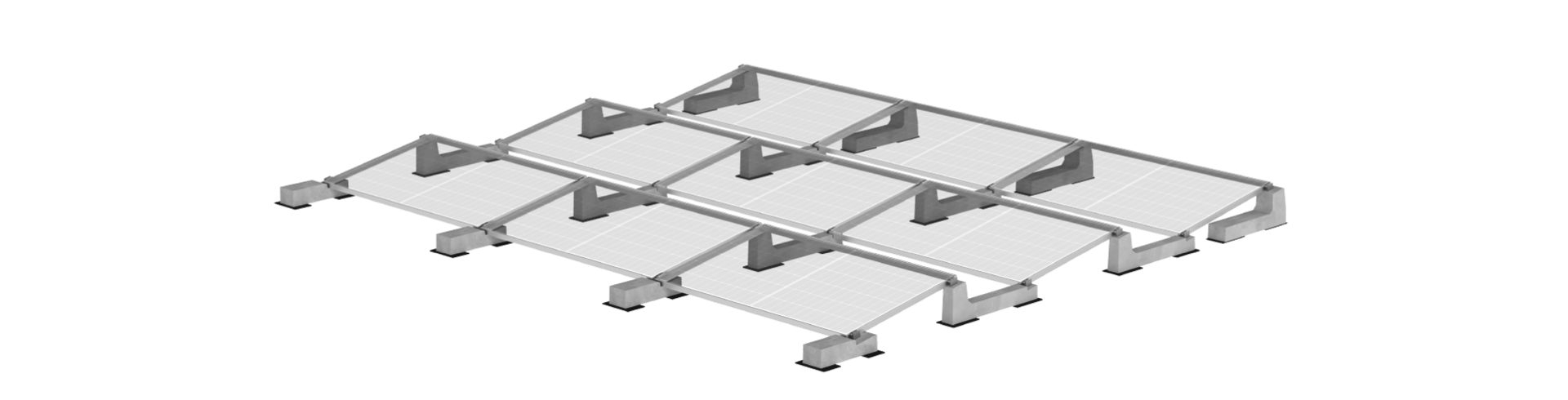
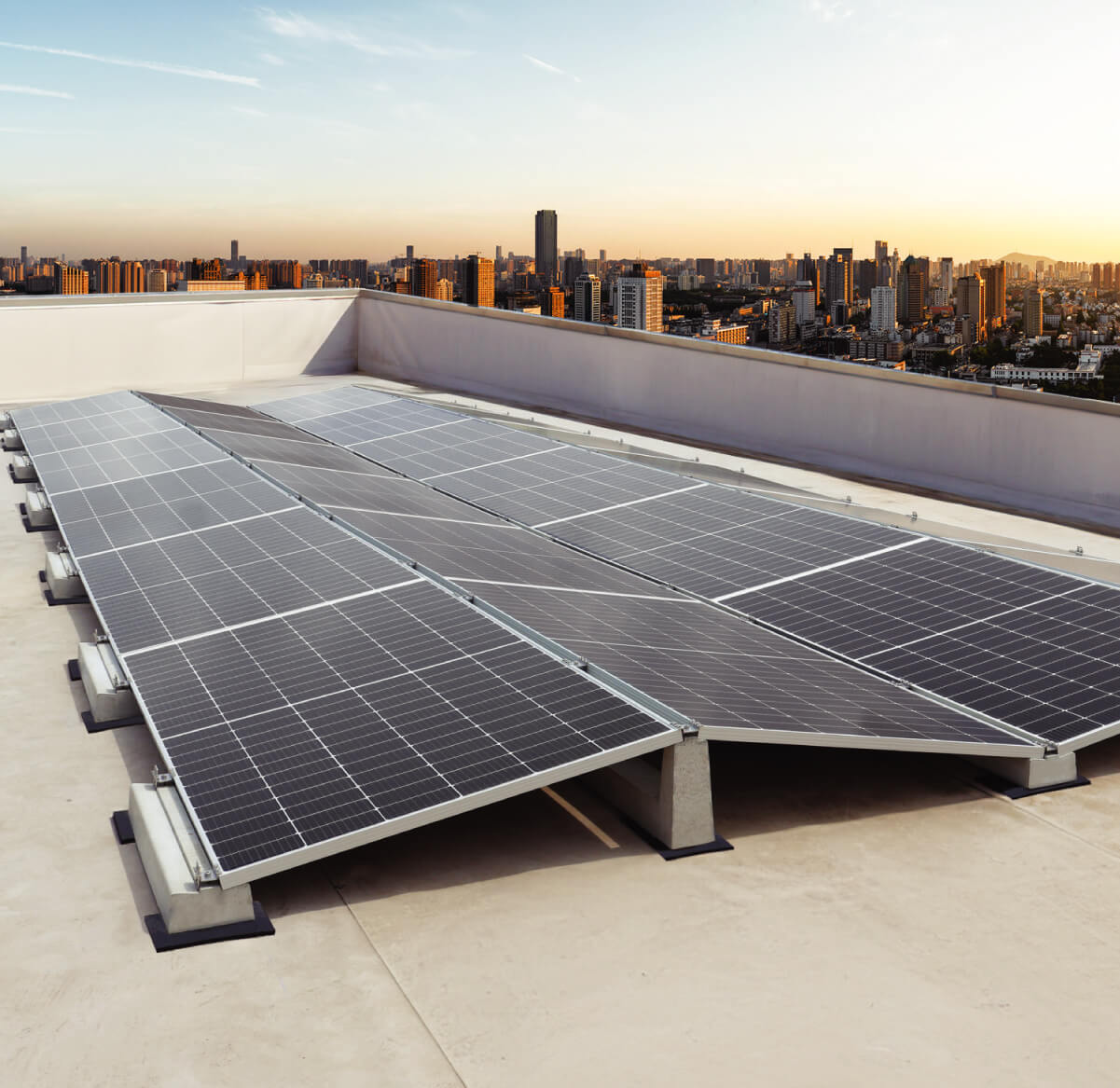
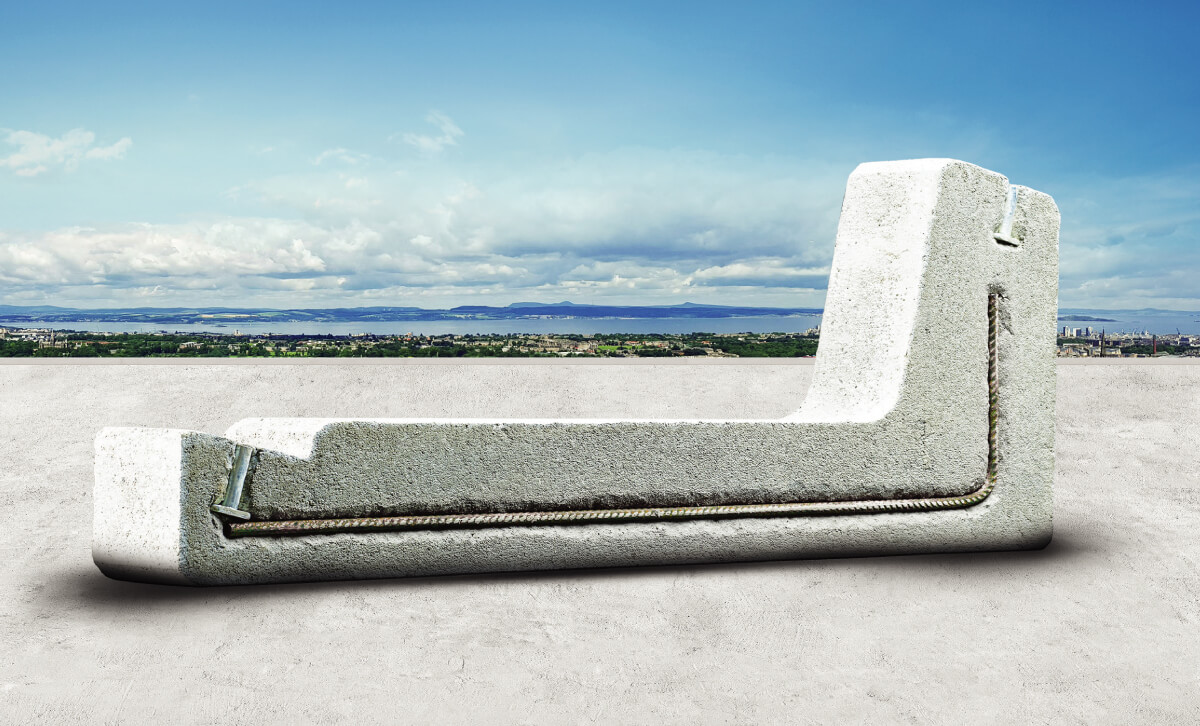
becoming the go-to choice for flat roofs. By using concrete ballast supports, panels can be
installed without drilling through the roof membrane—helping reduce leaks, callbacks, and
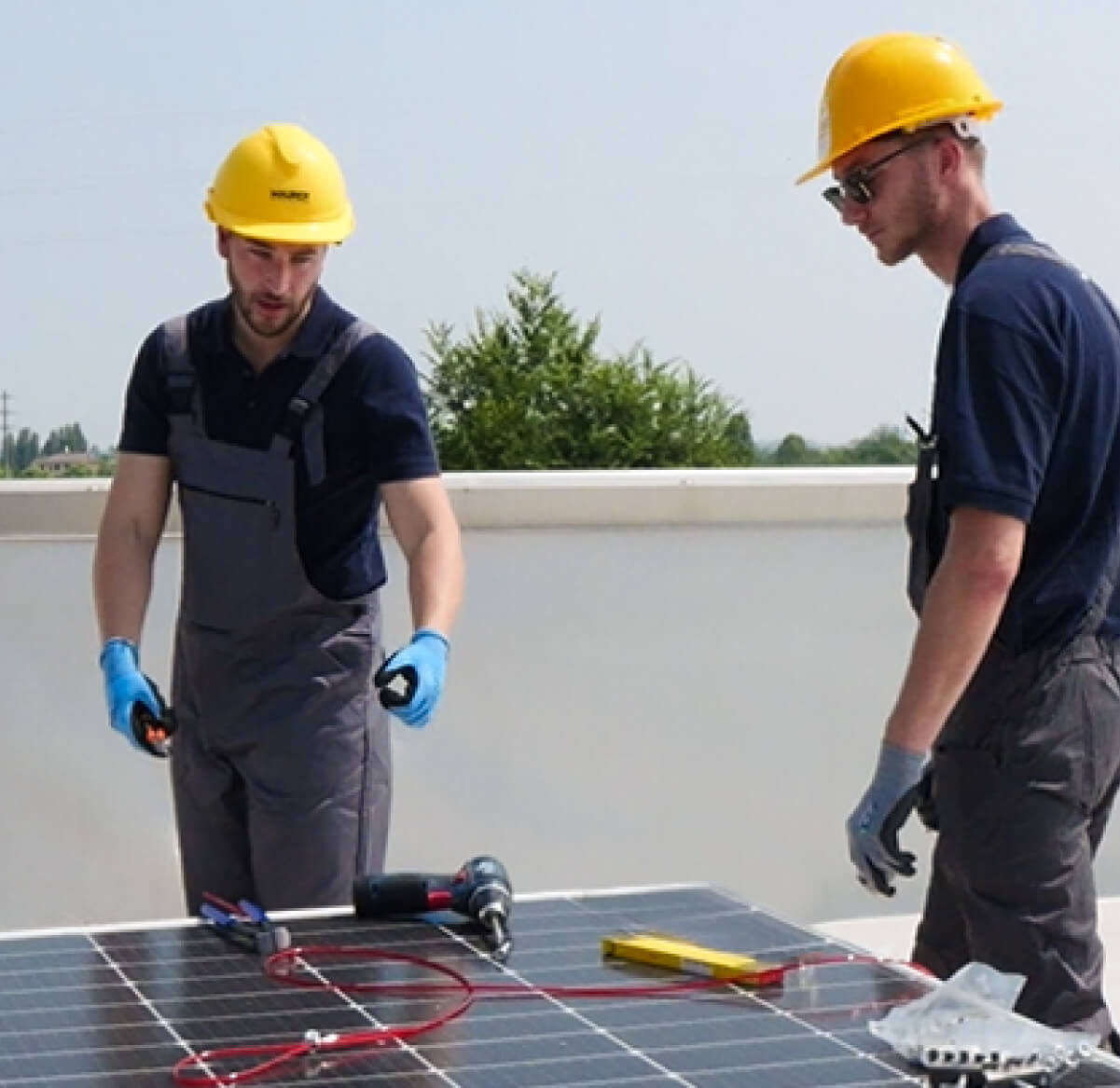
long-term maintenance concerns. For installers, fewer components and an intuitive layout mean
shorter installation times and smoother logistics. For designers and engineers, the key benefit
is predictable performance: wind load management, stable weight distribution, and the ability to
work with tested configurations that simplify calculations. And for distributors, a recognizable
flat roof solar solution is easier to stock and recommend because demand is consistent across
industrial buildings, warehouses, and commercial rooftops. A well-designed ballast mounting
system also supports common goals like better row spacing, clean cable routing, and optimized
tilt angles to improve yield. In short, if you’re looking to deliver reliable flat roof solar
arrays with less complexity, non-penetrating ballast structures offer a practical path: safer
roofs, faster crews, and a more efficient workflow from design to commissioning.
Why Ballasted Mounting Matters for Installers
and EPC Teams
On flat roof solar jobs, time is margin. Ballasted systems help
crews move faster by minimizing loose parts, reducing rooftop handling, and avoiding the delays
that come with drilling and sealing. The result is a cleaner installation process, especially on
large surfaces where repeatable placement is crucial. Non-penetrating PV mounting also lowers
the probability of water ingress issues, which can otherwise lead to costly disputes. Many
projects benefit from modular configurations that adapt to different panel formats,
orientations, and roof constraints, making site decisions simpler. For EPC teams, the advantages
extend to planning: clearer BoMs, fewer specialized tools, and more predictable labor. When
support is available for layout and sizing—considering wind exposure and roof loads—flat roof
solar becomes easier to standardize across multiple sites, improving overall delivery speed.
A Technical Partner Approach: Design Support
and Proven Reliability
Successful flat roof solar is not just about hardware; it’s about
confidence. Professionals want certified, tested solutions, reliable data, and support that
reduces design risk. A partner-led approach can include technical assistance during the
engineering phase, system sizing, and project development through execution—so installers get
fewer surprises and engineers get dependable inputs for verification. Concrete ballast solutions
are valued for durability and stability, especially when paired with proven aerodynamic layouts
and documented performance. This combination supports what the market expects: reliability,
simplicity, and ongoing innovation that keeps pace with evolving PV modules and rooftop
requirements. If your goal is to deliver flat roof solar installations that are safer for the
building, quicker to deploy, and easier to specify, choosing a non-penetrating, ballast-based
mounting strategy can make the entire project feel more controllable—from first design draft to
final handover.